Close-up on two caps being popped off Arabic Coke Cola bottles with a satisfying hiss, transitioning from the last scene by connecting the imagery of the opening rock with the opening bottles. Though the bottles are Arabic versions, the Coke Cola brand is distinctly American in origin, subtly foreshadowing the American interventionism and influence at play in this exotic nation.
As we pull out, we see the African man in desert garb (Scott Edward Logan, credited as Nairomian Driver) who opened the bottles extend one towards an American who comes into view on the left, played by Michael Cassidy, who would later work with Zack Snyder again on Army of the Dead, and previously played the character Grant Gabriel in Smallville (2001-2011). His character here is leaning against the car they arrived in. A sandstorm is raging as he drinks from the Cola bottle.
Currently unknown instrument playing a short sequence of high-pitched notes (sounds similar to the Korean piri or taepyeongso, but is most likely an African cousin, given the setting), becoming an echoing ring slowly trailing off. This cue completes the desert theme.
Then the driver remarks, “All that wind is bad luck. Blood in the sky.” This foreshadowing of the great death to come is fitting considering that Kryptonite was unearthed at the end of the previous scene. “Oh, there she is!” he says, pointing to our right.
Attention is drawn to an arriving taxi cab, and some text reveals our location: “Nairomi, Africa.” This is accompanied by the camels in the foreground and indigenous people in African attire to establish the setting. The country is fictional. A woman steps out of the taxi, a scarf around her head.
The American steps forward and calls to her, “Miss Lane!”
Lois Lane (Amy Adams), in sunglasses, turns to look over her shoulder at the camera as we move in on her face to emphasise her introduction. Like in Man of Steel, she is introduced during an assignment she is undertaking for the Daily Planet.
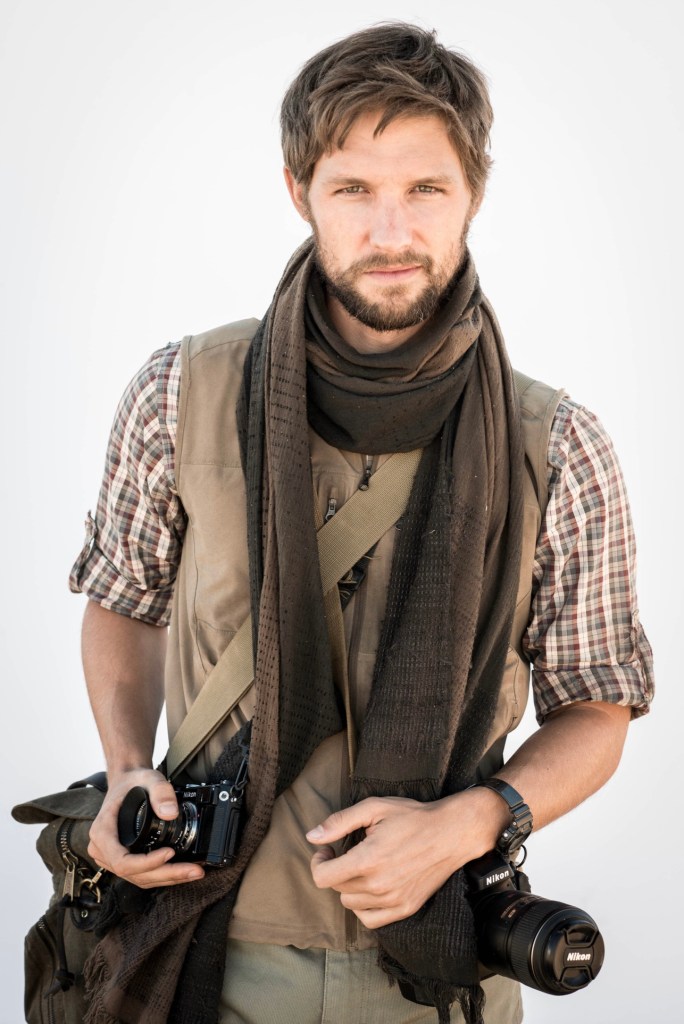
The man walks up beside her, offering a handshake. “Miss Lane. Jimmy Olsen. Photographer. Obviously,” he says, gesturing to his gear. Of course, this is the name of the Daily Planet photographer from the comics.
Not taking the handshake, Lois instead responds with a question: “Where’s Heron?”
“Uh, trouble at the border,” responds Jimmy, awkwardly retracting his hand. This news that Jimmy is replacing Lois’ usual partner sets up the later reveal that he is a CIA operative who replaced Heron to gain access to General Amajagh. We can tell from this moment that Jimmy is a little awkward himself, in keeping with traditional depictions of the character. As Lois turns to walk, he follows, trying to make small talk. “So, uh, how’d you land it? This is, like, pioneer stuff. Amajagh’s never given an interview.”
“You know what Heron always says when we’re on assignment together?” asks Lois, flatly. Then she stops and turns to him. “Not a goddamn thing.” She turns away and chuckles. “I like Heron.” While rude, this tells us Lois is not too fond of unfamiliar partners on assignments, indicating a lack of trust with partners she does not know. For an award-winning reporter who goes on dangerous assignments to meet rebels, this makes sense. It also shows that Lois puts her work first and foremost, uninterested in chit-chat with a rookie. In the comics, Lois is traditionally mean-spirited towards Jimmy, which further misleads into thinking he is about to become a recurring character. This exchange may also be inspired by a sequence from The English Patient (1996), one of Snyder’s favourite films, wherein Almásy (Ralph Fiennes) and Katharine Clifton (Kristin Scott Thomas) speak while sitting side-by-side while they drive through the desert.
Katherine Clifton: “I’ve been thinking — how does someone like you decide to come to the desert? What is it? You… You’re doing whatever you’re doing in your castle, or wherever it is you live, and one day, you say, ‘I have to go to the desert,’ or what?”
Almásy: “I once travelled with a guide who was taking me to Faya. He didn’t speak for nine hours. At the end of it, he pointed at the horizon and said, ‘Faya!’ That was a good day.”
The English Patient, 1996
In the sand-swept distance, a Land-Rover 110 Station Wagon emerges from the haze and drives up.
Music returns with building ominous elements, telling us these are not necessarily good guys coming. The ethnic instrument returns.
Lois turns to Jimmy and says with a smile, “Let’s go.”
The two enter the vehicle. Inside, two rebel soldiers sit behind them, and the driver (Christopher Dontrell Piper) says something in his native language. The man next to him (Theo Bongani Ndyalvane) translates, “Passports, electronics, phones, camera.”
Jimmy and Lois remove their sunglasses to finally reveal their eyes. Lois says, “Your fixer said that the General approved photos.”
The translator relays this to the driver, who glances at them suspiciously. After a moment, he ultimately seems satisfied with this and shifts gears. This draws attention to Jimmy’s equipment, setting up the reveal of the CIA tracking device hidden inside.
The two men sitting behind Lois and Jimmy abruptly put bags over the heads of their guests. Cut to black.
A rumble from the soundtrack.
Cut to Lois and Jimmy’s knees hitting the sandy ground, then to the bags being removed from their heads.
Ominous elements again, sounding very vaguely like a darker version of Superman Theme A on low strings.
They are now in a compound containing a group of African rebels. Among them are mercenaries, and the camera draws our attention to their leader, Anatoli Knyazev (Callan Mulvey). He is a villain from the comics, where he is otherwise known as KGBeast.
One of the rebels (Julius Tennon, credited as General Security Chief) steps out from behind him. He points while Lois walks by in the indicated direction.
Cut to the smiling leader of the rebels in sunglasses, General Amajagh (Sammi Rotibi), who takes a seat on the ground. Lois sits before him, preparing her notebook. She gets straight down to business and asks, “Are you a terrorist, General?”
The ominous music takes a break as the interview begins.
Looking somewhat disappointed as he maintains a smile, Amajagh responds, “They did not tell me the interview was with a lady.”
Lois replies, “I’m not a lady. I’m a journalist,” a passive-aggressive response to the General’s remark that highlights her lack of fear. Chris Terrio confirmed this line references the words of journalist Marie Colvin. After arriving in war-torn Chechnya, the Chechens would not shake her hand due to being a woman. She responded, “There is no woman in this room, only a journalist.”
Qurac Defence Minister: It is just that I did not expect your newspaper would send a woman.
Lois Lane: You have a problem dealing with women?
Action Comics #598, “Checkmate,” John Byrne, Paul Kupperberg, 1988
Amajagh then gives a response to Lois’ question: “What I am is a man with nothing… except the love of my people.”
While he speaks, Jimmy, still kneeling, looks around uncomfortably before gently standing, watched closely by the rebels and mercenaries as he unhooks his Nikon S3 (Black Edition) 35mm camera from around his neck.
“I like the idea that Jimmy still shot on film, a slightly analog dork, which I think is cool, but also because he really is a spook for the CIA or whatever branch of the government he works for, this analog camera would be a perfect cover, like, ‘Of course, it’s completely harmless!’”
Zack Snyder, Batman v Superman: Dawn of Justice, Director’s Commentary, 2021, 13:31
Very faint, dark pulsing over a sustained, dissonant note preserves a tense atmosphere.
Gesturing to the mercenaries, Lois asks, “Who’s paying for these security contractors, General?” Of course, “security contractor” is just the polite way of saying “mercenary.” This question, emphasising that the mercenaries are only part of the rebel cause in a paid capacity, sets up their true allegiance to Lex Luthor.
Amajagh’s sunglasses are gone now. Cryptically, he asks, “Who pays for the drones that pass over our heads at night? One question begs another, yes?” This alludes to the coming reveal of CIA interventionism in Nairomi, keeping tabs on the country’s civil war and evidently making plans for an arrangement, as we soon learn.
As Amajagh says this, Jimmy is aiming his camera when Knyazev grabs the lens. Jimmy is perturbed but relents, allowing Knyazev to take the device.
Realising Amajagh is implying American interference, Lois encourages him, “Say what you’re saying, general.”
As Knyazev begins fiddling with the camera, Jimmy pleads, “It’s just a camera.”
Knyazev simply glances at him through the dark lenses of his sunglasses.
Lois continues, “The United States has declared its neutrality in your country’s civil war, both in policy and in principle.”
As Lois says this, Knyazev gets the camera open as Jimmy warns, “No, don’t open…” Knyazev glances at Jimmy, who says, “You just exposed…”
The camera falls to the sand.
“These pious American fictions spoken like truth,” responds Amajagh with amusement.
“Okay, that’s my film,” Jimmy says as Knyazev stretches the tape from the film container, ripping it free.
“Men with power obey neither policy nor principle, Miss Lane,” continues Amajagh.
Knyazev crushes the container under his boot.
“No one is different. No one is neutral.”
Knyazev stands into view, revealing a small beeping device between his fingers.
A hit of percussion and bass with the reveal. Suspenseful dissonant strings create ambience as everyone proceeds to realise they have been tracked.
Jimmy looks defeated and concerned, the device in the foreground to connect it with him.
Knyazev turns and shows the device to the Security Chief. “CIA,” he says.
Hearing the initials, Amajagh turns to look.
Knyazev cracks the device in two as the Security Chief angrily remarks, “They’re tracking us!”
Lois turns to look over her shoulder at the commotion as he barks orders at his comrades, and the rebels seize Jimmy by the arms forcefully.
Strings pick up tempo on a new, repeating melody to emphasise the sudden escalation.
Standing now, Amajagh grabs a Browning Hi-Power pistol from a subordinate, stepping up beside Lois, who is also standing.
Jimmy is forced to his knees.
Amajagh, looking Lois in the eye, asks, “You’re CIA?”
“What? No. No!” she responds, defensively.
“You brought him here!” the General yells, angrily gesturing to Jimmy.
“No, he’s a photographer!” she insists.
Amajagh ignores her and turns away to approach Jimmy.
Fearing for her partner’s fate, she yells, “No!” but rebels restrain her before she can get far. Though she does not trust Jimmy, we can see that she clearly values his life, despite having only known him for a short while. This contrasts her earlier rudeness and shows the scale of her heart.
Suddenly in defence of Lois, Jimmy begins speaking their language, saying, “<Not her. We just used her credentials as cover. She doesn’t know anything.>”
Lois is surprised by his sudden change in dialect.
Jimmy says to her in English, “It’s okay, Lois.” After being ousted as a CIA agent, this concern for Lois ensures we can still value Jimmy and expect him to survive. Surely he’s got this?
Amajagh approaches Jimmy, and you may notice rebels behind him standing aside for their safety in anticipation of the execution.
Jimmy continues addressing him in Nairomi’s language: “<There are solutions, General. I am authorised to propose an agreement.>”
Low-angle on Amajagh, taking aim at Jimmy’s head.
Shoulder shot from Amajagh looking down at Jimmy, aiming his weapon, seeming to hesitate for a moment to generate hope.
Back to Amajagh one last time, and he fires.
Abrupt stop to the melody.
Cut to a thermal graphic of the execution from a top-down view. We pull out from the monitor to observe a CIA control room. An analyst (Mike Kraft) comes into the left foreground, turning to say, “Talon’s down, sir,” confirming Jimmy’s codename.
The CIA supervisor in charge (Barton Bund) is on the phone, saying, “Python, we have lost our asset on the ground. Repeat, we have lost our asset on the ground.”
The strings return on the same repeating rhythm and get progressively louder.
Out in a desert encampment, we emerge from a tent in a tracking shot behind the leader of a small US military unit (Bailey Chase) on the phone with HQ. His team is assembled and ready beside their horses. He contests the order. “There’s still a civilian in the compound. We’ll extract her.”
“Negative,” says the supervisor over the walkie-talkie. “RPA to engage. Stand down and get black.” “RPA” stands for “Remotely Piloted Aircraft.”
Python Team Leader responds, “There’ll be friendlies in the blast zone, so… Call off the goddamn drone.” Then he clips the device closed.
At the command centre, the supervisor repeats, “Stand down is an order. Python?”
Defying direct orders, the small military unit mounts their horses. “Let’s move!” says their leader.
Wide shot circling left around the camp to watch the team ride out on their steeds into the desert, heading for the compound. This is the second appearance of horses in the film.
Suspenseful strings have reached their dramatic peak before ending abruptly with the next cut.
Behind the Scene
Director of photography Larry Fong tweeted Zack Snyder’s storyboard for this sequence. The dialogue is slightly different, and goes as follows, suggesting some additional recorded dialogue may have been cut out.
Supervisor: Negative. RPA will engage. Stand down and get black.
Python: There’s still a civilian in the compound. Request RPA intel support only. We will extract her.
Analyst: Counting twenty-three confirmed hostiles with armoured vehicles! Target pristine.
Python: Negative. Be advised, you will have friendlies in the blast zone. Call off the goddamn drone.
Supervisor: Stand down is an order. You’re…
Python: Let’s go.
Inside a building in the compound, Lois is up against a wall. Fearing she is going to die, she says softly, “I… I didn’t know.”
Ambience strings again.
Amajagh approaches her slowly, looking down to reveal Lois is on her knees. He says, “Ignorance is not the same as innocence, Ms Lane.” Later in the film, though Superman was not directly responsible, he is still blamed for the bombing of the US Capitol by virtue of having the responsibility to prevent the destruction but also being totally helpless to stop it due to his ignorance.
Lois looks down from Amajagh, gasping in anticipation of what might be her death.
Outside, Knyazev looks up to scan the sky, though his earpiece implies he is receiving intelligence that Superman is on his way. He nods a signal to another mercenary. The underling returns the nod.
The quiet, suspenseful melody returns, slowly beginning to build once again.
Knyazev approaches two rebels sifting through Jimmy’s duffel bag. Then he reveals his sidearm, a Heckler & Koch USP45, and shoots a rebel in the head, scattering blood on the wall behind him. His target was a smart choice, taking down the rebel facing him first, giving the second no time to react.
When the other rebel turns to Knyazev, the Russian pulls the trigger again.
Then he redirects his weapon, and we see him gun down a rebel on a guard tower with two shots.
The strings continue on that same rhythm while higher strings and increasingly dramatic choir vocals join on sustained chords. These chords follow the same progression as what will later be established as Lex Luthor Theme A, very subtly foreshadowing that this is all Luthor’s doing. Despite having not been seen yet, his presence is here.
Inside, Amajagh visibly hears the gunshots and looks concerned. Below, Lois looks confused.
Now the other mercenaries are shooting at rebels. One mows down two rebels with his machine gun. Another, back-to-back with the first, swipes fire to take down three more rebels just as they leap into action.
Ground shot on a line of bullets churning up sand, one striking Lois’ abandoned notebook.
Inside, Amajagh grapples Lois from behind and violently forces her to stand, taking a hostage. “Get up! Stand up!” he yells.
Outside, one panicking rebel emerges from an alley already firing before he can even aim, shooting up the ground as he raises his machine gun. Then he gets shot in the back beside a comrade.
Another mercenary is standing atop a Vickers FV 433 Abbot tank when he unpins a grenade, dropping it inside the commander’s hatch. He ducks off the vehicle and covers his head as smoke bursts out from its shaken crevices.
Indoors, Lois breathes hard as she struggles in Amajagh’s grip.
Outside, as the mercenaries throw the bodies of the rebels into piles, Knyazev ignites his flamethrower with a lighter, hooked to the gas tanks on his back. He yells, “Quickly! He’s coming!”
He peers around, again highlighting his earpiece, before focusing his attention on the bodies. Low-angle on Knyazev as he bathes the camera in flame, burning the bodies.
The choir roars ever louder.
Again, cut to Lois struggling.
Cut to a low-angle on Python riding their horses through the desert as a drone flies overhead, easily outpacing them. It is a General Atomics MQ-9 Reaper, the same model Superman brought down at the end of Man of Steel. Daunted, the troupe slow their stride.
Cut to the control centre. “Inbound two mikes,” says a CIA analyst. He turns to look at the screen over the controller’s shoulder where we can see the riders come to a complete stop. “Passing Python… now.”
With Knyazev’s job done and the new antagonists becoming the CIA, the choir in the suspenseful music fades away, but the repeating strings carry on.
Cut to Python Team Leader, a middle finger raised at the drone, presumably knowing that HQ can see him. This spite of their commanders over collateral damage is an admirable demonstration. Regardless, the drone flies on.
Cut to the doors to the compound opening. “Move out!” yells Knyazev to his men, now mounting their 2008 BMW F 800 GS motorbikes as they rev up the engines.
Wide shot of the compound entrance. The mercenaries ride out, one after the other, following Knyazev’s lead.
Cut to a screen in the CIA command centre, showing the drone is converging on the compound in the distance beneath a plume of smoke. “Target locked,” says the drone pilot (Dan Amboyer).
“You are clear to engage,” says the supervisor, totally without hesitation or remorse.
We move on the screens over the drone pilot’s shoulder, who says, “Armed hot and in range.”
Cut to somewhere in the desert, where Knyazev stops. He turns on his bike to watch the fireworks.
Live feed from the drone as we hear the pilot countdown, “Three…”
Repeating strings escalate further.
Lois struggling.
The drone pilot. “Two…” His finger closes over the trigger. “One…” He pulls the trigger.
Wing-mounted shot from the drone as the missile launches, heading straight for the compound.
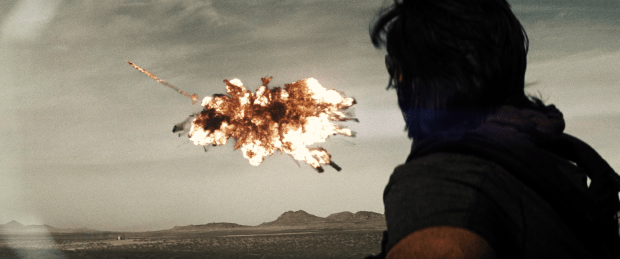
Point-of-view shot from the missile, flying at the smoke rising from the structure. Suddenly, the smoke is parted, and Superman flies through at the missile in a few frames.
Repeating strings reach their peak before the music abruptly stops.
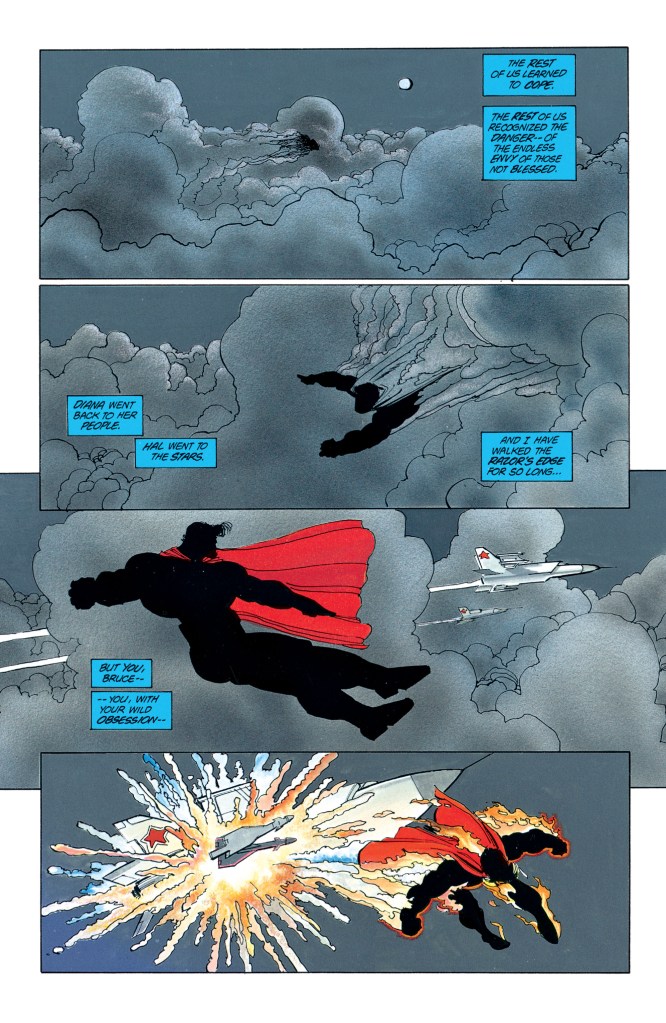
Shoulder shot from Knyazev to see the explosion. Then Superman intercepts the drone and annihilates that too, ending the threat. Knyazev watches, turns back to the road, and grins. A job well done. This also bears a resemblance to Superman destroying a Russian jet in The Dark Knight Returns.
Behind the Scene
“Here we see Superman taking out the drone. We did set the compound on fire, but we didn’t have a drone. Those explosions were all CG. The smoke and general fire coming out of the compound we did practically.”
Zack Snyder, Batman v Superman: Dawn of Justice, Director’s Commentary, 2021, 00:17:20
Cut to the drone’s camera feed from the control centre. “Link’s been hit,” says the CIA analyst as the video fizzles away.
“By what?” asks the perturbed supervisor.
Inside the compound, Lois and the jittery Amajagh hear a loud whooshing sound.
Shoulder shot from Amajagh as Superman crashes through the ceiling in a cloud of dust, head bowed.
Medium shot on the General and Lois, who begins to smile, but Amajagh looks anxious and warns, “Take one step and you will see the inside of her head!” Samuel Otten pointed out that Superman technically already sees the “inside of her head” as they know each other. A very subtle detail here is how Amajagh does not actually have his finger on the trigger, suggesting he never actually intended to kill Lois. If that is the case, it further amplifies how Superman’s imminent decision to take him down without diplomacy is a mistake.
Medium shot on Superman, standing up straight. His head is bowed, but the iconic Kryptonian symbol of hope on his chest is prominent here — the arrival of hope. The camera closes on his face when he suddenly turns his head up, looking angry at the endangerment of the women he loves.
Lingering and powerful four notes of Superman Theme A on low strings coinciding with his raised gaze, adding further grandiosity to his arrival. The first two notes rise, the latter two fall. A distinctly grand piece.
Cut to Amajagh, but we pan down to Lois, still smiling. A smart woman, she drops her hands from Amajagh’s arm around her throat after a moment’s pause. Her breathing slows, relaxing. She nods at Superman, trusting him to take care of this.
Cut to Superman, also hinting a smile.
Two notes of Superman Theme A on piano.
Back to Lois and Amajagh. Superman suddenly flies by, dragging the General through several walls behind Lois in barely a second. The comic book cover Action Comics #47 depicts Superman punching Lex Luthor through a wall, and was referenced by the Superman 75th Anniversary video directed by Zack Snyder, so Superman taking down Amajagh here may have been a callback to this.
Lois turns. Medium shot on her looking through the new cavity in the walls, shaken and breathing heavily, but otherwise relieved.
Krypton Motif plays briefly.
The aftermath of the incident. Wide shot of Python arriving outside the compound on their horses through the sandstorm. Locals have also assembled outside to watch. This sequence from here on is in slow-motion.
Reverse shot showing the compound. Two helicopters fly overhead as the soldiers dismount. The sandstorm clears left to reveal the full structure.
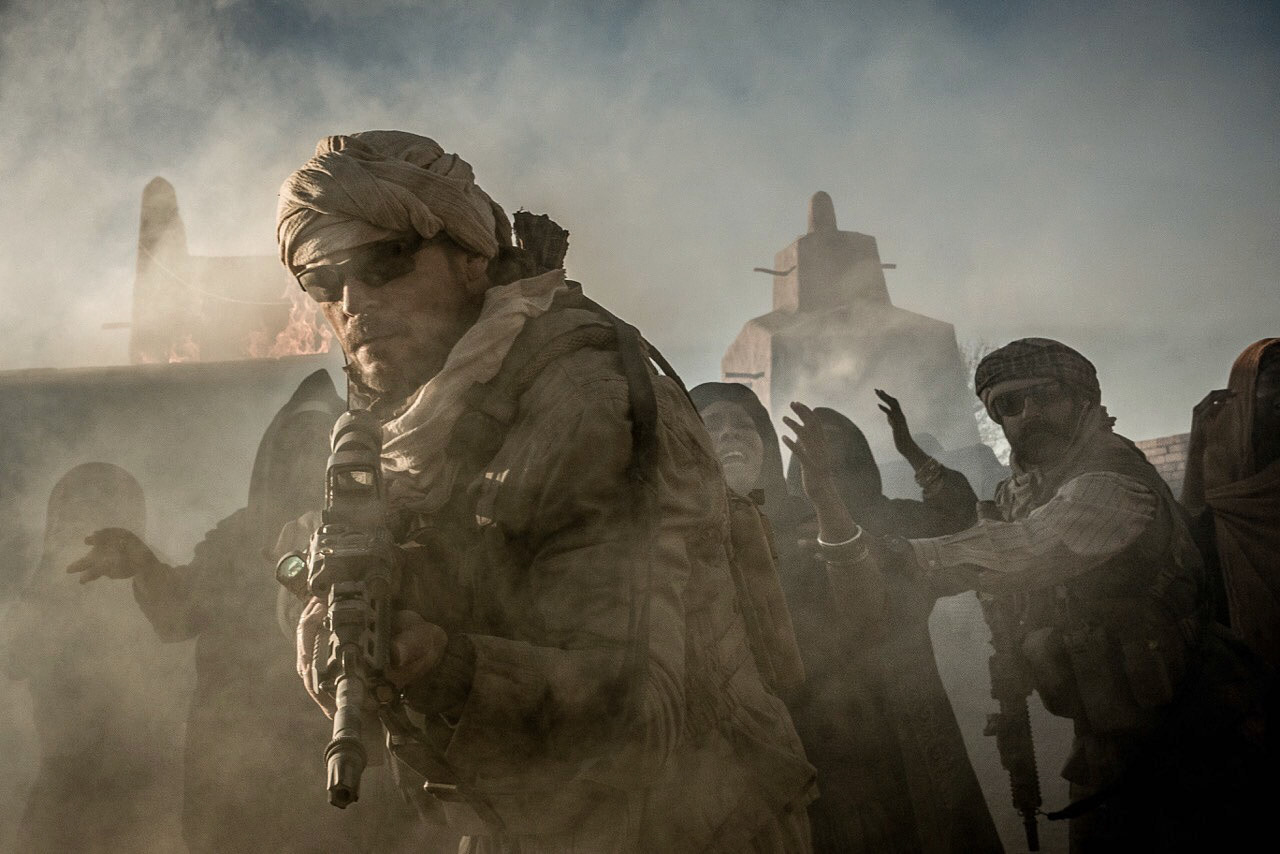
We track behind Python advancing through the open gates. Human silhouettes emerge from the haze ahead of them. As the dust clears, the figures are revealed to be distraught women. One cries with arms outstretched towards the arriving soldiers. Soon he moves through a crowd of women praying and begging for help.
Their pleas direct him towards a burnt body laying against a charred wall. As he moves on, the hands of the crying women direct our gaze to the pile of burnt corpses. We can presume that the women were related to the murdered rebels, most likely by marriage, and are grief-stricken by their deaths.
Up ahead is Lois, trying to comfort two grieving widows as they stumble away. By the end of the film, Lois too will lose the man she loves. Upon seeing the arriving soldiers, she turns aside.
Strings transition into a slow, solemn reprisal of If You Love These People from Man of Steel on piano.
Low-angle shot as she kneels to retrieve her notebook, wiping the dust free. Two soldiers close in behind her, Python Team Leader over her shoulder.
Reverse shot from the perspective of the soldiers, Lois turning to look at them. “The women in the village heard a noise,” we hear a woman with an African accent say remorsefully, associating her words with this event and the distraught women.
Krypton Motif yet again.
Cut to a shot of the African woman, closing in on her standing behind a podium in a hearing chamber in the United States Capitol. This is Kahina Ziri (Wunmi Mosaku), possibly named after a seer simply named Kahina from Aquaman comics. She continues, “Like the sky cracked open.” Her words appear filled with grief, slowly breaking down more as she peaks.
Wide shot of the chamber and the committee she is addressing. “He came down. Then came fire.”
Cut to the chair of the committee, June Finch (Holly Hunter). Her title of Senator is plainly visible on the emphasised name sign on her desk. She listens intently and sombrely as Kahina continues, “Even worse came after.”
Cut to a member of the audience, an Asian woman, also listening carefully. This is our first introduction to Mercedes “Mercy” Graves (Tao Okamoto). The character originates from Superman: The Animated Series. Both there and here, she is Lex Luthor’s faithful personal assistant, and is present at these proceedings to (as we later learn) ensure Kahina is lying as instructed. Kahina continues, “The government attacked.”
Cut to another committee member, Senator Barrows (Dennis North), named after the same Senator Barrows from Action Comics #1 (1938), the very first Superman comic. Kahina continues, “No mercy in the villages.”
Tearing up, Kahina stammers, “My parents tried to run…” Her story is that Superman descended and presumably killed the rebels with his heat vision. Afterwards, the Nairomi government attacked the rebel villages, slaughtering the civilians in the process. She is also making claims about the brutality of the Nairomi government that lend credence to what Amajagh said about his goals. He fought against the government of his country and protected the people of his village from their tyranny. At least, if we are to believe that Kahina’s false testimony is grounded in facts about the nature of the Nairomi government. Indeed, one man’s terrorist is another man’s freedom fighter.
Senator Finch says, “The world has been so caught up with what Superman can do that… no one has asked what he should do. Let the record show that this committee holds him responsible.” This question of Superman’s responsibility with how he uses his power is perhaps the most common thematic motif in the film’s commentary on the character.
Four notes of Superman Theme A again, but darker, slower, and less heroic. An act of altruism has been twisted and tainted by its consequences.
“He’ll never answer to you,” says Kahina. Now her words are laced with anger. “He answers to no one. Not even, I think, to God.” This is our first mentioning of divinity in the film, and it will continue to be a prevalent theme. As we learn later, it was Lex who wrote the script he threatened her to read, so in hindsight, Kahina’s words here are likely a subtle hint to Lex’s mentality.
SCENE OVERVIEW
With Bruce’s introductions done and Kryptonite introduced, we come to the fictional nation of Nairomi, where Lois Lane is reintroduced with her true reporter’s heart, and Superman is properly reintroduced up close with all his grandeur. The unexpected death of CIA agent “Jimmy Olsen” further sets a tone and style following the introduction of Russian mercenary Anatoli Knyazev. Through rebel General Amajagh’s monologue, themes of power and its relation to neutrality are set up to build the film’s political elements. A sudden betrayal and massacre sets the stage for Lois’ role in the story and frames Superman for a controversy brought up in a US Senate committee formed to discuss him. Lastly, we have been introduced to Kahina Ziri in her tearful recounting of the consequences of Superman’s drone-like intervention, and Senator June Finch — the story’s voice of reason.
SCENE ANALYSIS
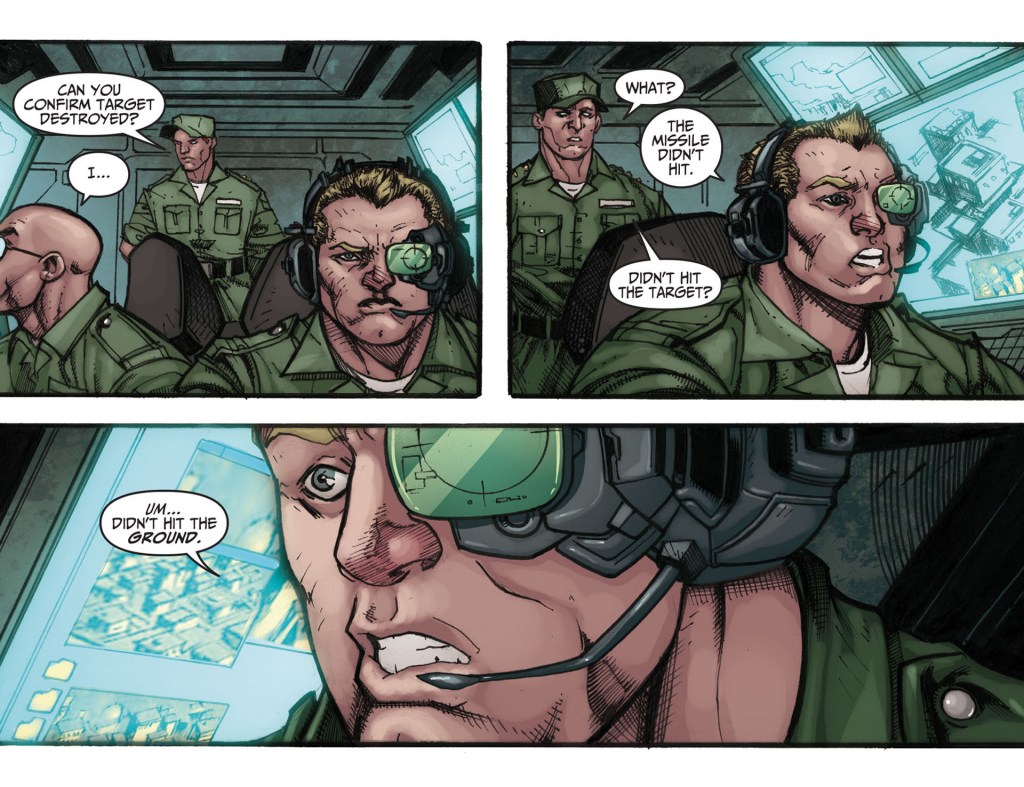
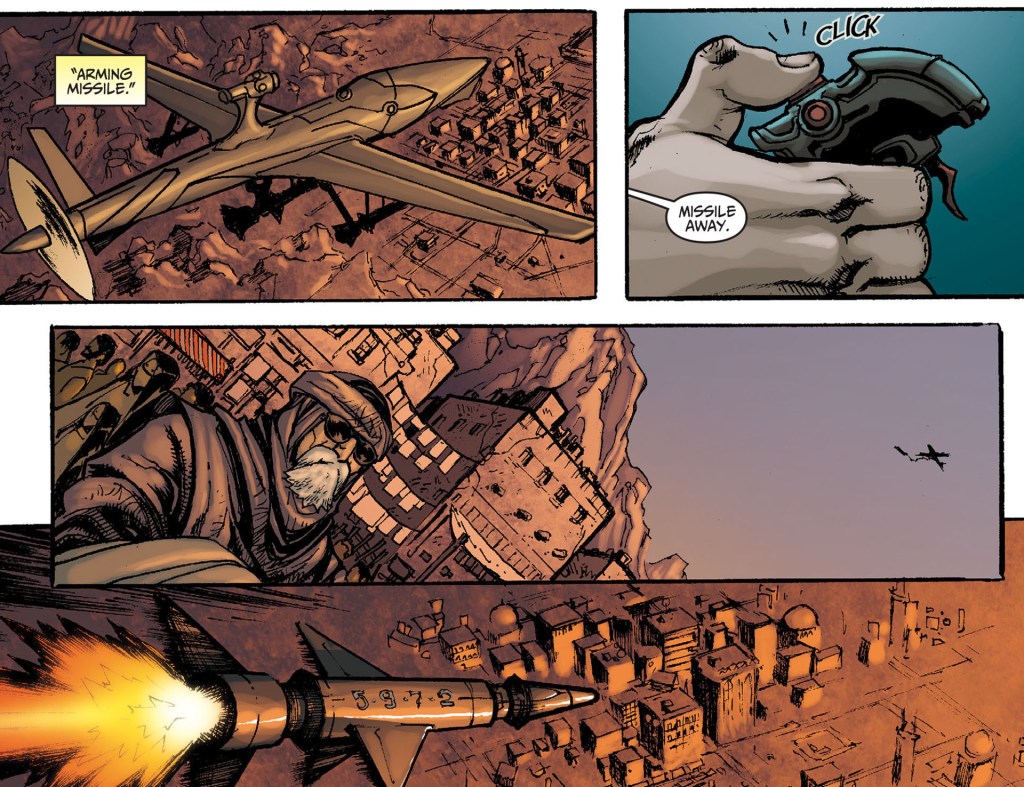
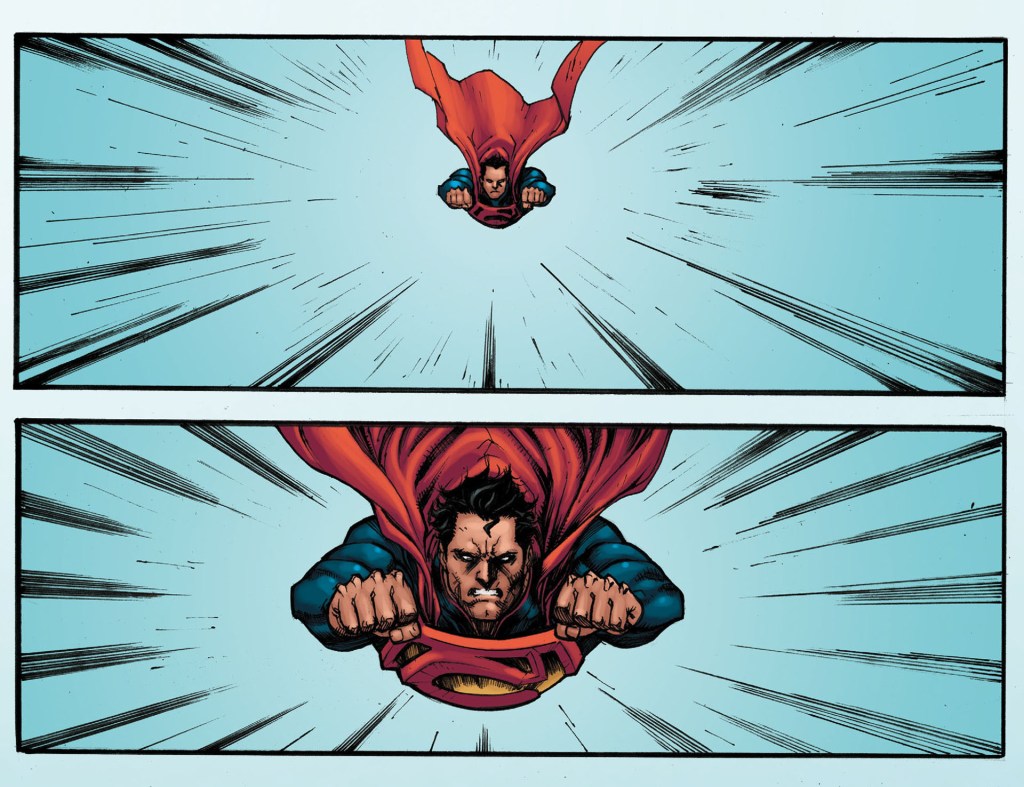
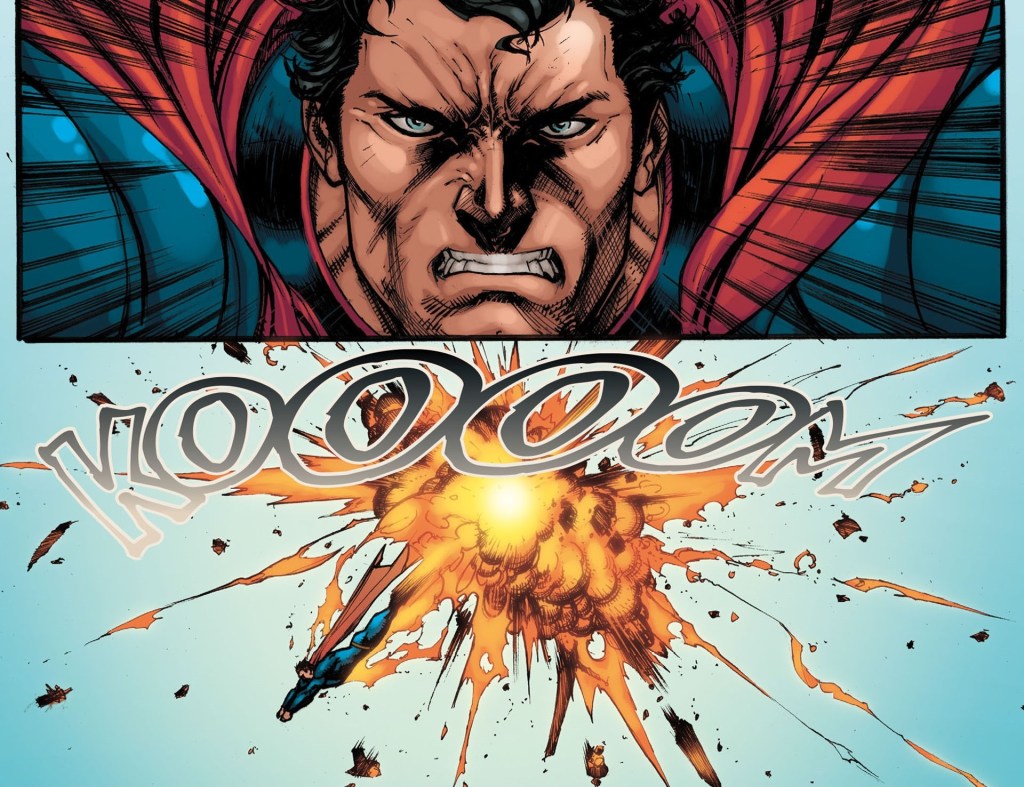
The visuals of this sequence are likely inspired by a scene from Injustice: Gods Among Us #7 (2013), where Superman interferes in US army operations in Africa to intercept and destroy a missile fired from a drone. The CIA command centre strongly resembles Nevada Drone Command seen in the comic, along with the shot of the missile being launched from the control stick. However, no one involved in that comic’s creation was credited in the film’s Thanks section, so this may be coincidence.
Superman intervening in foreign countries is nothing new for the character. His intervention leading to massive political fallout was also a story seen in Adventures of Superman #427 and #428 (1987), where he invades the fictional African nation of Qurac. The presence of American foreign intervention may be influenced by Action Comics #598 (1988), where the US government organisation Checkmate (created by Amanda Waller) assassinates the aforementioned Quraqan Defence Minister by blowing up his plane. Superman: Earth One Vol 2 (2012) also heavily involves Superman’s intervention in foreign nations.
For most of it, this scene could be part of some political-action thriller film with its intensity, seriousness, and believable grittiness. The scene is so realistic that we practically forget Superman exists until he makes his supernatural entrance here, breaking into humanity’s world as if he suddenly intervened in a different movie, reinforcing how Superman is now a part of our reality — a divine violation of humanity’s place at the top of the food chain.
This scene is our first brush with the theme that one person’s villain is another person’s hero. General Amajagh is depicted as a terrorist by the tyrannical Nairomi government, yet the people hail him as a freedom fighter. Furthermore, note how Amajagh never once says he actually intends to kill Lois, even though she assumes he will. The general acknowledges her unwitting complicity in the CIA’s deception, but despite that, Lois is still a journalist — which is why he never intended to kill her. When Superman arrives, note how Amajagh’s finger isn’t on the trigger of his pistol while holding Lois hostage. You will never find this level of depth and attention to detail in any other superhero film. From Amajagh’s perspective, his insurgency compound was infiltrated by the CIA, his fellow freedom fighters slaughtered, and then Superman came down like an angry god to violently subdue him. The worst thing Amajagh did was execute the CIA operative who infiltrated his compound for purposes he knew to be nefarious.
It was thus Superman’s mistake to swiftly subdue Amajagh without using diplomacy. He’s like a drone. He descends from above, takes down General Amajagh with zero thought to engaging peacefully, and leaves without stopping to consider the consequences. This conduct is the cornerstone of his arc in the film as Zack Snyder comments on the necessity for Superman to be more thoughtful, while also commenting on American interventionist policies. Snyder also confirmed the drone comparison…
“Superman, in his mode as international policy-maker, it’s a lose-lose, right? What you’re confronted with is this sort of aftermath. The question is, is Superman responsible? Or is he like a saviour? That’s the game that we play with in this movie, and frankly, with Superman in general. He was raised in Kansas and he is a good guy. He tends to have the correct moral fortitude, but what is correct?”
Zack Snyder, Batman v Superman: Dawn of Justice, Director’s Commentary, 2021, 00:18:21
“I was also always really happy with all the different placards. I remember doing a drawing of the drone and they painted it the colours of Superman, which I thought was a really interesting way of thinking about the way people would think about Superman in the context of having the ability to invade our space in a similar way to the way people were thinking about drone strikes and how drones had this kind of power outside of a manned aircraft, that they were this entity that would come into your life and drop a bomb on you or something, and I thought that was a really interesting way to link Superman to some kind of foreign policy concept in that context.”
Zack Snyder, Batman v Superman: Dawn of Justice, Director’s Commentary, 2021, 1:31:13
What General Amajagh says during this scene has direct relevance for the rest of the film. Superman ultimately loses the love of the people but still has Lois and his mother through it all, a sort of opposite of Amajagh. The fascinating dichotomy is that morally dubious people like Amajagh or Batman seem to receive the popular support that Superman does not. It is not until Superman loses his life that he gains the unanimous love of the world. Similarly, General Amajagh’s rebels are deemed “terrorists” only up until they’re all dead and the Nairomi government allegedly slaughter the people the rebels fought to protect.
“I really like the idea of when our special ops team gets to see what was staged perfectly for the aftermath of what it would look like if had Superman had been a wrathful god. Lois knows the truth. I think the cloud, the fog of war, where we’re so affected by this sort of imagery of a conflict, when we get the story at the committee meeting, we understand how it translates back to us at home. It would be really easy to create imagery that would bring the morality of Superman — not even the morality of Superman, his actions — into question, and I think Holly [Hunter] does a great job of being this voice of reason, this really clear, non-judgemental, but also thoughtful… It’s like how the story goes through Holly and back to the world is a really modern way of looking at how Superman’s morality would be perceived by us.”
Zack Snyder, Batman v Superman: Dawn of Justice Watch Party, 29 March 2020
Superman flying to foreign nations to enact his personal sense of justice is nothing new, but this depiction is special because Superman isn’t just here to battle a foreign enemy. His intervention interrupts American action. He’s getting in the way of his own government. This is also the most negative the CIA has ever been depicted in a superhero film at the time of its release, having fired a missile to wipe out the village and its civilian inhabitants, including a member of the American press. Despite this, the government is shifting the blame to Superman for the ensuing massacre. They are essentially throwing Superman under the bus to distract from themselves. Had Superman not stopped the drone strike, Lois and the civilians would be dead, and no one would be discussing the incident in hearings — another unnoticed loss of life in a third-world country, dismissed and ignored. Yet more clandestine interventionism would go quietly under the radar without an ounce of condemnation. In fact, it is implied no one even knows about the attempted drone strike, including these senators. Of course, the strike was presumably intended to remove witnesses to the discovery of US intervention, but in preventing it, Superman gave the CIA an out anyway.
In hindsight, we know Kahina lied in her statement to Congress. However, whether you interpret the massacre by the Nairomi government to be a real occurrence or not, either reading works. If the massacre took place, we have an allegory for how extremist militants like ISIS or Al-Qaeda draw their atrocious motives from the consequences of American (Superman’s) intervention, which creates opportunities for malicious parties to seize power and kill their enemies, or by generating hatred for the intervening party. If the massacre was fabricated, then the narrative reflects how political regimes create false flags to manipulate public sentiment. For example, how the fabricated Gulf of Tonkin incident triggered the Vietnam war, or how a story of weapons of mass destruction incited the war in Iraq — though in this case, to generate hatred for Superman, the refugee/minority metaphor, in service of the malicious goals of a corporate tycoon. Most notably, Kahina’s testimony echoes the infamous Nayirah testimony that contributed to support for military action against Iraq during the Gulf War. In fact, we don’t even need a metaphor, because literal American interference is still occurring with the CIA machinations and their attempted murder of multiple civilians and an American journalist. It’s the single most scathingly negative depiction of the CIA in any superhero film.
The citizens of that Nairomi village suffered the deaths of their loved ones in a pointless conflict between agents with no real stake in their country’s affairs. A corporation and the United States government and military destroyed their lives because of one billionaire tycoon’s personal beef with Superman. Considering the CIA presence in the region and their using the Nairomi rebels as guinea pigs to test out LexCorp weapons in the field, the complicit US personnel now carry incentive to cover Lex’s back for both their sakes. These are deeply profound references to the corruption in the military-industrial complex in the Western world and the interventionist policies that turn foreign nations into battlegrounds for agendas they had nothing to do with.
“The challenge for us moving forward is how to depict Superman in a world like this, in a world where Twitter exists, in a world with social media. To me, the interesting challenge is ‘Could he solve hunger in the horn of Africa? What would he do with the Arab Spring? What would he do in Syria?’
Partly you could argue, ‘How could he not intervene in something like the situation in Syria?’ but the other argument is, ‘Is it a hornet’s nest if he intervenes? Does he have the wherewithal or the knowledge to intervene in something like this?’
To me, that’s the interesting challenge. It’s easier for Batman because he just exists in this little pocket of the world, he’s not violating sovereign airspace every day.”
“I was able to add material to the film and asked the movie to grapple with what that [battle] meant, so that it didn’t seem like a casual scene of Superman intervening in this way without reckoning with the consequences of intervention. I placed that in context of a moral question. Superman says, ‘Think of what could have happened,’ and Lois says, ‘Think of what did.’
Without sounding too political, it’s not lost on me that much like a drone, Superman sort of comes from out of nowhere from the sky and vanquishes his enemies and then flies off with no consequences. That may not have been an angle on Superman that people wanted to see and wanted to think about.
Yeah, [the Senate scene] was added afterwards. I added that scene. ‘He came down, and then came fire.’ The story that she tells, at least in the script, is that he destabilized the entire region, and then government forces came in and slaughtered the village. Since these were the optics that already were in the movie, I thought that my job was to ask questions and say, ‘What do we actually mean by this?’”
Python exists to extract Lois from the compound before the Nairomi government gets involved, but they also serve another purpose. At their comfy headquarters, the CIA have no sympathy or concern for the civilians in the village, controlling their flying death machine from a computer like a video game with a cold, inhuman perspective far from the action. Meanwhile, Python are the boots on the ground with personal involvement, showing visible concern for the reporter in the compound, firmly rejecting their orders in favour of extracting Lois Lane. This dynamic is likely a very clear theme in criticism of the use of drones in warfare (especially considering Superman has now destroyed two drones in two movies), or a display of the callous indifference of the CIA to the lives of innocents.
The music track in this scene is “The Desert” (“Blood of My Blood” in the official soundtrack, referencing a later line from Lex, presumably in reference to this scene’s opening line). This track is largely ambience to accompany the scene, but it does introduce Superman for the first time in this film. Most importantly it includes a very clever, very subtle bit of foreshadowing to the greater plot of the film in tying Lex Luthor to this scene, as it will later be revealed that this incident was masterminded to place blame on Superman, which was successful. This track plays in parts throughout the scene, with pauses, hence why the scene is over twice as long as the track.
BEHIND THE SCENE
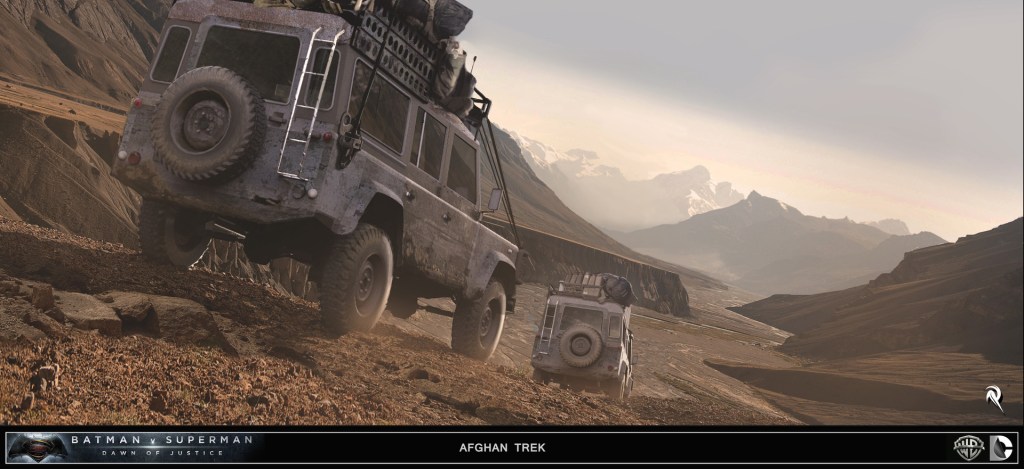
Afghan Trek by Concept Artist Rob McKinnon, indicating there may have been a longer travelling scene originally before being cut down for something better suiting the pacing.
This scene has its origins as far back as 14 June 2013, mere days after the release of Man of Steel, and possibly further back still during the conception of the basic premise of Batman v Superman. David Goyer was especially interested in exploring the political fallout of Superman’s global jurisdiction, primarily in the form of intervention in foreign political/military affairs.
“Amy [Adams] actually inspired that opening scene in Batman v Superman. She mentioned journalists who have been in war zones and we went along with it.”
“On Superman’s entrance, I had planned a much bigger action scene, but in the end, I felt like it was better just go with a simpler entrance because I really liked the parallels of his entrance here and with Lex later, this kind of lightning bolt entrance which would be very otherworldly, like how a god would enter.”
Zack Snyder, Batman v Superman: Dawn of Justice Watch Party, 29 March 2020
According to Chris Terrio, the original version of this scene included Lois getting punched by the rebels, followed by her making a joke after Superman arrives in the vein of, “You’re in trouble now.” Terrio wisely removed this element to give weight to Superman’s intervention and the political implications therein, instead of making a joke of it. As such, the scene can be taken more seriously. Most of all, it’s also more sensitive. Whereas most superhero films would celebrate the heroes ripping up a compound of nondescript Arabs for a cool action set piece, Superman’s intervention is framed as clearly problematic, and in turn drives a major aspect of the plot.
“I’m the one who had been saying that we can’t make a joke out of Superman raining hell upon Black African Muslim characters in the desert, as Lois promises that Superman is not going to go easy on them because they punched her.
I removed the punch [of Lois], for one thing. Just think about the optics of that. I was able to add material to the film and asked the movie to grapple with what that [battle] meant, so that it didn’t seem like a casual scene of Superman intervening in this way without reckoning with the consequences of intervention. I placed that in context of a moral question. Superman says, ‘Think of what could have happened,’ and Lois says, ‘Think of what did.’”
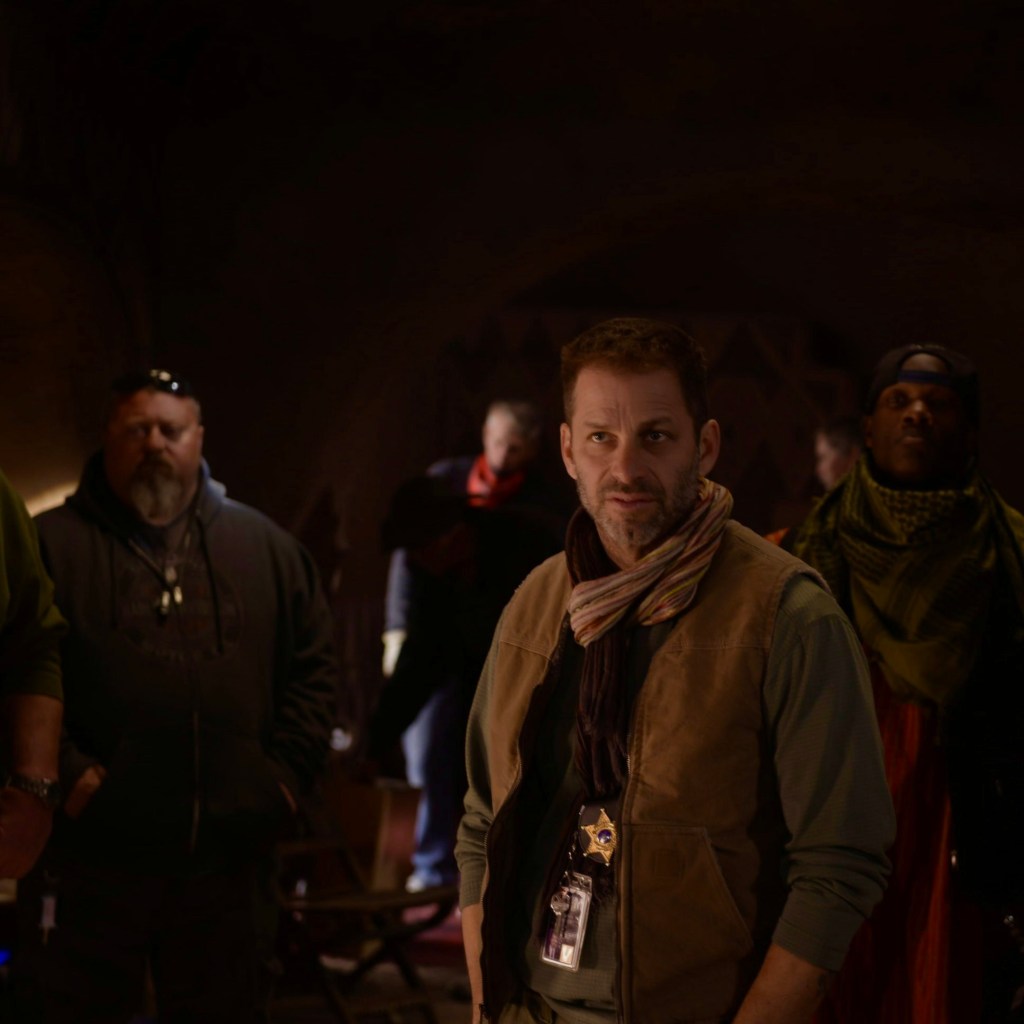
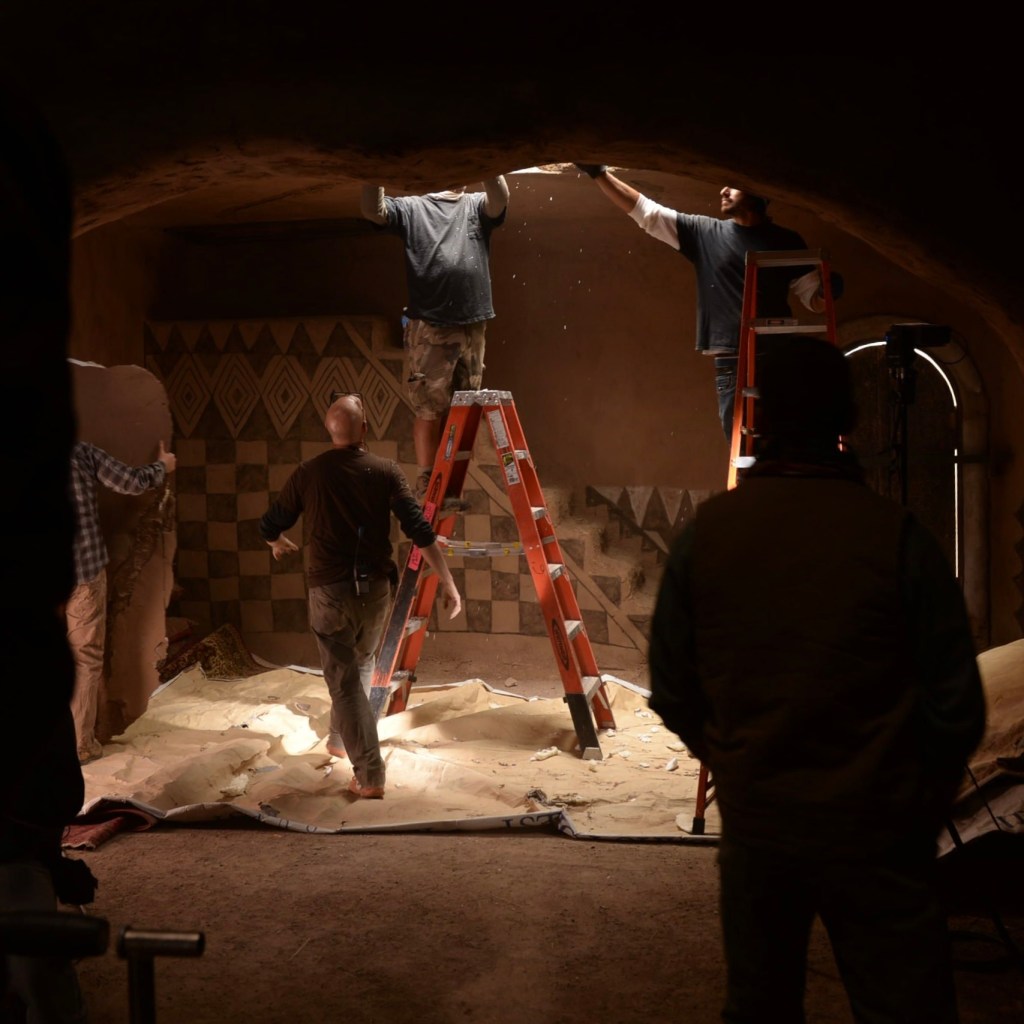
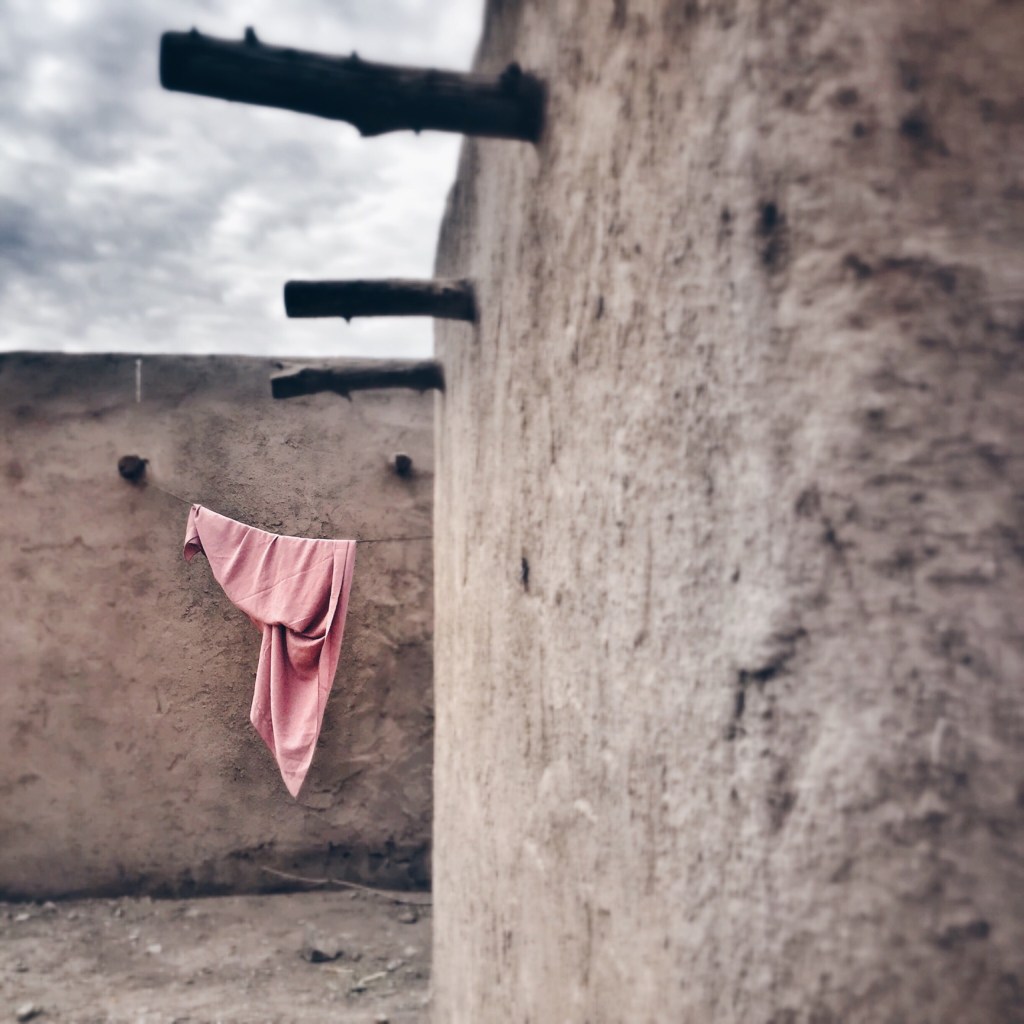
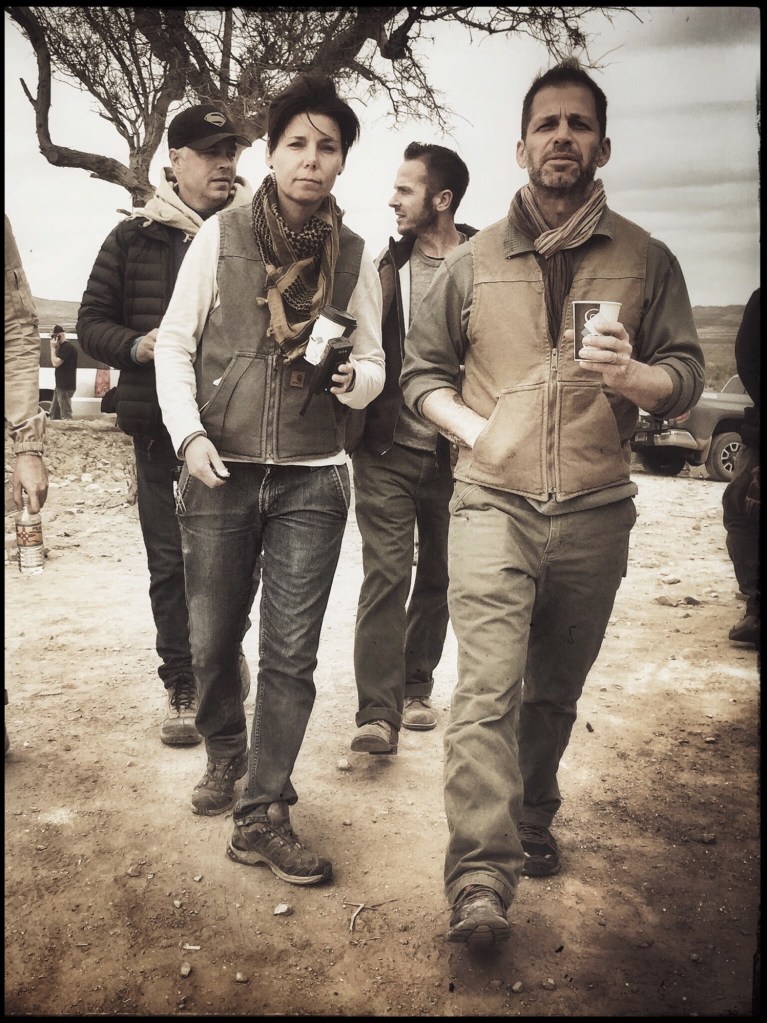
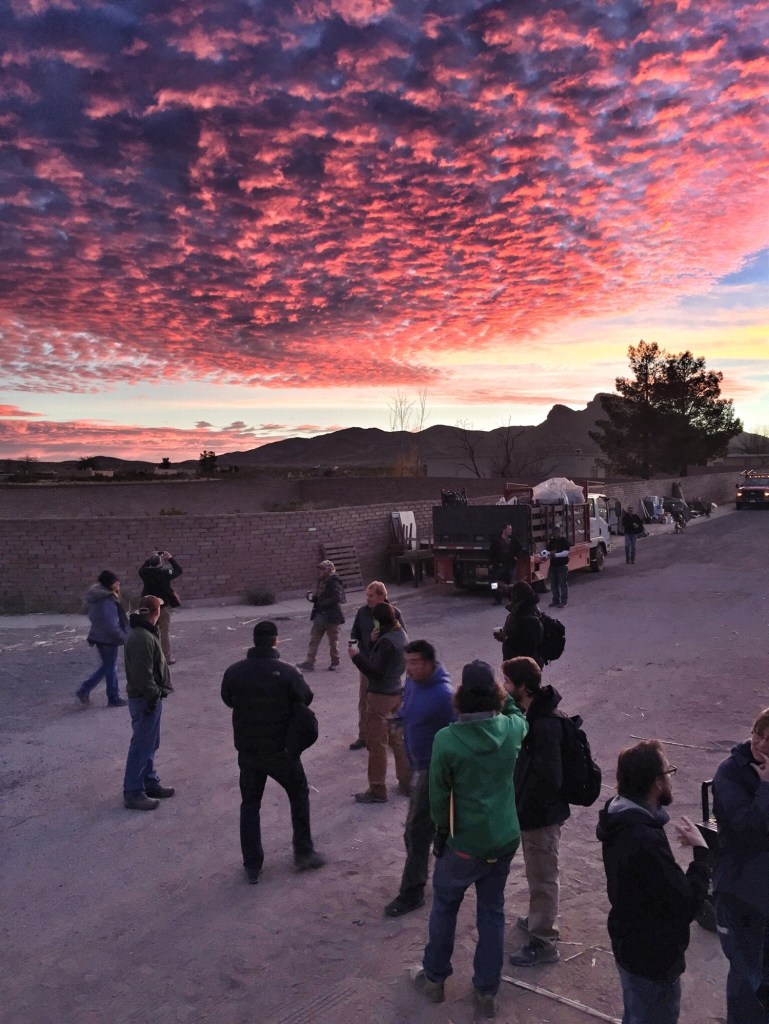
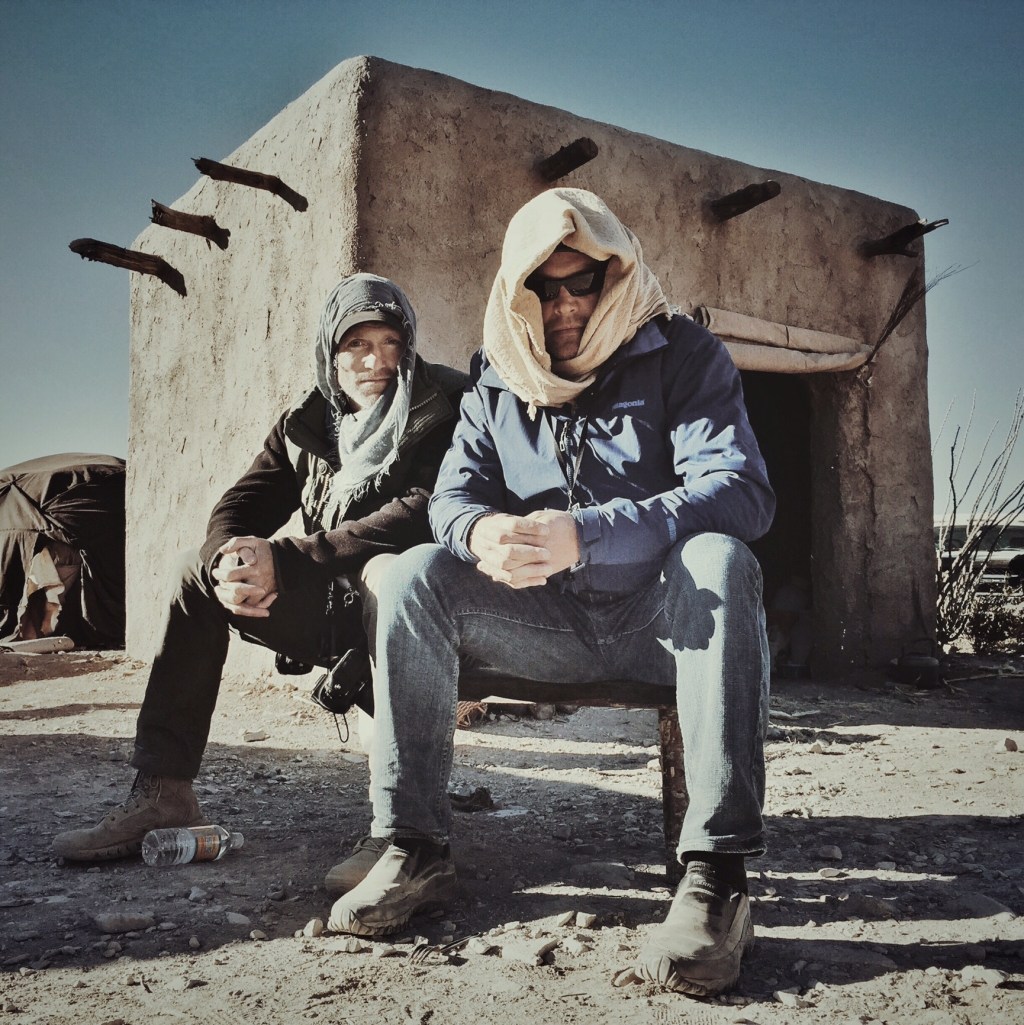
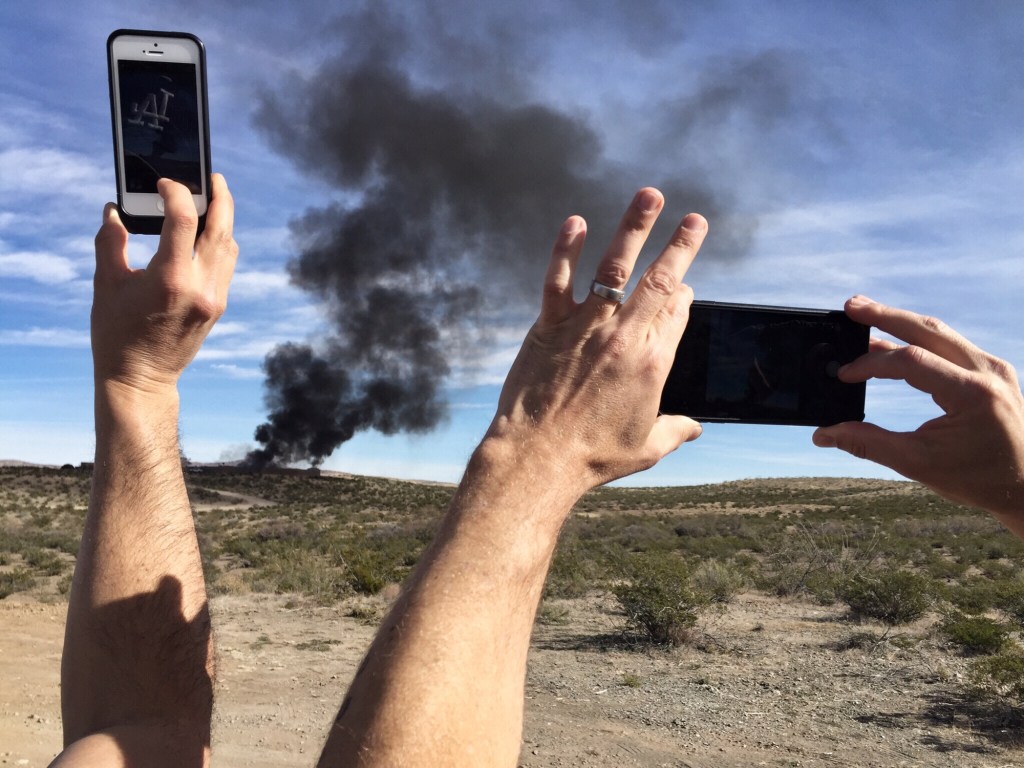
On 19 August 2014, Morocco-based film producer/director Nassim Abassi tweeted that Batman v Superman would be filming in Morocco for an authentic African location, and was reportedly scouted a year prior around August 2013, but unfortunately, due to fears concerning the Ebola outbreak, it was reported in 21 November that the shoot was relocated to the town of Playas outside Deming, New Mexico. Playas was formerly developed by the Phelps Dodge Corporation as a copper smelter in the 1970s. It was sold to New Mexico Tech around 2004 and turned into the Playas Training and Research Centre for the US Department of Homeland Security. The Nairomi compound was constructed atop the existing training facility, built with African structures as authentically as possible. KOAT managed to record helicopter footage of the set being built, placing the construction process around October 2014, a close month before filming began there. The interior compound set was built at the same location.
“This sequence we shot in New Mexico. I think it was an old mining town of some kind. A tungsten mine or something like that, I forget exactly. They’d built a mining town around it and then the mine went bankrupt, so then the CIA and other law enforcement communities were using it for training, and I guess the US military had built a sort of Afghanistan-style village there, and then we took that village and turned it into Africa.”
Zack Snyder, Batman v Superman: Dawn of Justice Watch Party, 29 March 2020
“We looked at New Mexico and found a training compound for the army. Cinder block walls and places for the guys to train and little huts, but very typical, modern, low buildings. So, what we had to do, I said to Zack, ‘We need to create the ancient part of it.’ It was an amazing experience, as we created those buildings the way they used to build them with wood and mud, and then starting to decorate it slowly and putting up paintings that they might have on the walls.”
Patrick Tatopoulos, Batman v Superman: Dawn of Justice: The Art of the Film, 29 March 2016, p36
“It was pretty complicated. Light cues, shafts of light, an actual 4-wall set (outdoors, not on stage) with a visible ceiling (nothing to hang lights from), a crumbled ceiling, a destroyed wall, and views 360 degrees. So it must have taken several hours at least.”
In 23 September 2014, Warner Bros put out a casting call for extras for an “African village” scene. The distraught Nairomi women who were credited are portrayed by Diana Gaitirira, Esodie Geiger, Jalene Mack, Nene Nwoko, and Michele Rene. Based on all the available details below, I believe the main cast and crew left Chicago for New Mexico around 16 November. Filming likely concluded around 2 December, and the crew headed North to film the mountaintop scene in the Taos Ski Valley around the 4th. Shooting the Nairomi scene in mid-November would be the last time Henry Cavill wore the Superman costume before filming Zack Snyder’s Justice League.
Some shots in this scene appear to be unusually grainy for 35mm film, but director of photography Larry Fong revealed on Twitter that this was truly just the effect of the sandstorm against the lens, confirming that no CGI was needed to create the storm.
Snyder was looking for an actor to play Jimmy Olsen, initially looking at Jesse Eisenberg, with the goal being to create a misdirect using a famous face to make people think he would survive for the whole film, and then subverting expectations with his sudden death to shock the audience and send a message that no character was truly safe. Eisenberg was ultimately cast as Lex Luthor, and Michael Cassidy played Jimmy Olsen.
“We just did it as this little aside because we had been tracking where we thought the movies were gonna go, and we don’t have room for Jimmy Olsen in our big pantheon of characters, but we can have fun with him, right?
I thought, if it were Jesse Eisenberg and he got out and he goes, ‘I’m Jimmy Olsen,’ you’d be like, ‘Oh my God, we’re gonna have Jimmy Olsen in the whole movie, right?’ And then if he got shot, you’d just be like, ‘What!? You can’t do that.’”
“I just like the idea that Jimmy was a spook for the CIA. I always felt like Jimmy never was that capable, and to see him being able to speak foreign languages… People always ask me if he’s dead in this scene, like, do we see him again, I don’t think so. It implies a bigger universe, like these dominoes are falling as we go forward. It was a five-movie arc, and as the dominoes fall as you go, you ended up with the consequence, and the world is rebuilt again each time as the movies continue. So, if this was a TV show, I would say for sure we bring Jimmy back. Let’s figure out a way, or I would have constructed it a different way, but in the case of this kind of limited view of the world, it’s like a chess game, you move your pieces ahead as you need them, and the ones that die off die off for a reason, and hopefully as they die off they give us something, they teach us something as they go, and that’s kind of what their role is in the mythology that is the superhero pantheon. You want to use the mythological strength of each character to teach us about who they are, the why of their existence in the comic books to begin with.
Of course, that would change in time as different directors or different comic book artists continue the legacy of the work; they can change and reap. I’m sure you could make a Jimmy Olsen TV show if you felt like it, or a Jimmy Olsen movie, a one-off ‘origin’ of Jimmy Olsen, but for me, this is the purpose he serves, and that’s fine.”
Zack Snyder, Batman v Superman: Dawn of Justice Watch Party, 29 March 2020
Zack Snyder confirmed in the director’s commentary (15:12) that the CIA control centre was shot on a stage in the late Michigan Motion Picture Studios along Centerpoint Parkway, Pontiac, Michigan. According to Dan Amboyer (the drone pilot), his sequence was shot “right at the beginning of shooting,” placing it somewhere in May or early June 2014.
The Senate Committee Chambers were filmed in the interestingly named Wayne County Building, 600 Randolph Street, Detroit. The committee sequences were evidently shot on the 18th and 19th of August 2014. Basecamp was set up in the parking lot of 700 Randolph Street, just across the road. Just Jared snapped multiple photos of Henry Cavill in-costume outside the South entrance with suit partially concealed, and at base camp, and Bananadoc got some photos of Holly Hunter, Scoot McNairy, and Tao Okamoto. Photographer Randy Chiang took countlessphotos of Henry Cavill, Tao Okamoto, Holly Hunter, Scoot McNairy, and Jesse Eisenberg around the building. PatrickLeahy was also seen arriving for his cameo.
“It has this amazing old-world but government feel to it that they just don’t build anymore.”
Bill Doyle, Production Supervisor, Batman v Superman: Dawn of Justice: The Art of the Film, 29 March 2016, p51
“It was a big, beautiful building that gave us a lot of the interiors… It was a great resource for us, because it was such a large space and gave us so many different shots, and we only had to concentrate on what we had to add to it.”
Patrick Tatopoulos, Production Designer, Batman v Superman: Dawn of Justice: The Art of the Film, 29 March 2016, p51
“The room was literally 6 different colours of marble and designated historical, so we could not use a nail or screw. To visually elongate the room, I added blue velvet drapes on the opposite wall.”
Carolyn Loucks, Set Decorators Society of America, 9 May 2016
Dan Amboyer, who plays the drone pilot, was rumoured to be playing DC superhero Green Lantern (Hal Jordan). These rumours were exacerbated by an interview he did with PopSugar where he made cryptic claims about his role and references to filming on “another planet, literally,” that greatly encouraged the rumours, which were further supported by a fake plot leak that made waves.










 Snyderverse Analysis
