BATMAN V SUPERMAN: DAWN OF JUSTICE
SAVE MARTHA


External high-angle shot of the building. Lois’ helicopter descends in the foreground over the pillar of smoke rising from the flames left in the wake of Superman’s heat vision.
A tense string pattern comes in, befitting the urgency of Lois rushing to the rescue.
Low-angle shot on the descending red chopper, panning down to watch it land.
Interior shot of the chopper to see Lois slide open the door as quickly as she can and jump out.
High-angle shot from an empty window of the decrepit building to see Lois make a beeline for the entrance while the helicopter takes off.


In the Wayne Station lobby. Batman moves threateningly over to the downed Superman, emerald spear in hand.
The music goes quiet.
Using his armoured boot, he rolls the groaning Superman onto his back.
Tone full of contempt bordering on disgust, he says, “You were never a god,” echoing Wallace Keefe’s “False God” vandalism. He raises his leg.


Batman plants his giant metal boot on his adversary’s throat, causing him to further grimace, but he is too weak to fight and chokes. @ImperiousLex on Twitter suggested that this shot might be a parallel to the shot of Martha Wayne before Joe Chill shot her in the throat, which would be comparing Batman to his parents’ murderer in accordance with the scene’s intent.
Shaking, Batman continues, “You were never even a man.” This concludes his monologue from the previous scene, making these his final message to his prey. They emphasise how Batman sees Superman as something inhuman and unworthy of moral consideration, rather than focusing on his normal justification for killing Superman out of fear that he might be a threat to mankind, reinforcing that they are more excuses. This all sets up the big revelation.
“I’m not a god. I’m not a man.”
Superman, Kingdom Come, 1996
Superman gasps under Batman’s boot when the spear tip’s green glow fills the screen. Batman places it against Superman’s cheek and swipes, cutting a crimson line across the alien’s face and fulfilling his promise to make him bleed. Superman can only wince in pain.
A rising brass and string figure accompanies Batman cutting Superman’s face to build anticipation.
Batman raises the spear overhead for the killing blow. This is surely the moment Superman dies. We know Batman is not above killing thugs on the streets of Gotham, much less an alien creature he has just deemed beneath moral consideration. There is no hesitation or uncertainty in Batman’s intent.
The music goes quiet.
“You’re letting him kill Martha!” Superman says, struggling to speak with the boot on his throat. Superman is disassociating himself from Martha, excluding any mention of her being his mother. This prioritises the appeal to Batman’s heroism, removing himself from the equation and focusing on an innocent woman whose life is in danger. Note his phrasing: “You’re letting him kill Martha.” By removing the Lex Luthor specificity, Batman is symbolically allowing Martha Wayne to die, in turn leading to his coming meltdown. Bruce also heard similar words earlier, “You let your family die!” sent to him by Lex to exploit his feelings of failure and powerlessness. Now they come into play here again to motivate Batman down a new path shortly. “Him” can also refer to the persona of Batman, the monster consuming him, and killing Martha’s son while allowing her to die would be no different from killing her himself, reinforcing how Batman has become what he beheld in his fight against crime. All of this symbolism accounts for Batman’s upcoming agitated response.
Batman hesitates and looks down at the choking Superman.
Superman merely gurgles beneath the vigilante’s boot.
Looking confused, Batman asks, “What does that mean? Why did you say that name?”
Struggling to get each word out with the boot on his throat, Superman wheezes, “Find… him! Save… Martha!” Superman is convinced now that he is going to die, making a last-ditch effort to plead with Batman the vigilante to find the people threatening Martha’s life and save her. The first part of this line could also work as a symbolic message to find the humanity he used to have — the Bruce Wayne that Batman threatens to destroy.
“What else could he say to Batman holding the Kryptonite spear? He’s about to plunge it into his heart! Like, what is he going to say? What is he going to say to convince him that his love of humanity is as high as Batman’s? I mean, really, Superman could kill him in a second, so that was why I was like, ‘Well, he’s got to play every possible trick.’”
Zack Snyder, GQ, 18 April 2024
A quiet Batman Theme A comes in on a slow solo piano.
His mouth hanging open, we hold on Batman before cutting to the Wayne Mausoleum dream sequence with a flash of white light alongside the distant words of Thomas Wayne saying, “Martha.”
A haunting feminine vocal accompanies the transition with the flash of light.
Waist-level shot on the flowers in Bruce’s hand, the Mausoleum in the background. Sudden flash of white light.
The Death of the Waynes theme returns once again on a solo piano as the murder of Bruce’s parents is revisited with Bruce’s flashbacks.
Cut to the name of Martha Wayne engraved on the wall inside the crypt.
Extreme close-up down the barrel of Joe Chill’s gun.
Medium shot on Bruce as Thomas throws his fist into their attacker.
Alongside the sombre piano notes, ominous strings briefly accompany this moment where Thomas prepares his fist. This music anticipates the moment he attacks his family’s assailant, dooming himself.
Cut to the gun firing.
Extreme close-up on the shell casing ejecting from the pistol.

We elevate on Bruce, breathing harder, starting to grit his teeth in emotional pain. The flashbacks here are not just for us, but for Batman, recalling that traumatic night, making this a post-traumatic stress reaction.
Side close-up on the pistol under Martha’s pearl necklace. It fires, and the recoil snaps the necklace.
Feminine vocals enter again as Martha Wayne perishes.
Low-angle rear shot on Martha falling in a hail of pearls to reveal Joe Chill.
Low-angle on child Bruce falling down the cave shaft.
Back to Batman, still elevating on his face. This further reminds us that he is the one having these flashbacks.
Cut to young Bruce screaming inaudibly.
Strings come in here, further building the haunting theme as we approach the moment of realisation.
Close-up on Martha, shuddering for a moment before she goes still.
Extreme close-up on Thomas Wayne, whispering the name, “Martha.”
Extreme close-up on Martha’s eye, dilating.
Back to Batman. Fully triggered, the vigilante becomes enraged and shrieks, “Why did you say that name?!” The implication is he assumes Superman is trying to manipulate him.
Superman is helpless to respond as he chokes under Batman’s heavy boot.
Cut to the nearby vandalised pillars to see Lois running into the lobby.
We hear Batman continue yelling, “‘Martha’! Why did you say that name?!”

Lois runs over to where Batman stands above Superman yelling, “Clark! Stop!” She throws herself down beside him, a courageous act to protect the man she loves. Looking up at Batman, she pleads, “Please! Stop!”
Still screaming, Batman repeats, “Why did you say that name?!”
Lois yells, “It’s his mother’s name!” Then, more quietly after a brief pause, she repeats, “It’s his mother’s name.” She looks up at him pleadingly.
As Lois finishes speaking, the strings at their peak come to an abrupt stop, but a single solitary feminine choral note carries on.
Then the rage disappears from Batman’s face. His demeanour has completely changed, now calm and imbued with a new understanding.
After a moment, he removes his boot from Superman’s throat.
The solitary feminine vocal tone finally dissipates, like the verbal echo of Martha Kent’s memory saving her son’s soul in his defining hour.
We track Batman as he steps back heavily off the pile of rubble, reeling from the realisation and the guilt. Some time passes in silence before he finally roars and tosses the spear aside, landing among chunks of fractured concrete. This is much like Arthur discarding his glowing green blade in Excalibur (1981) after defeating Lancelot with the titular sword.
“This excellent knight, who fought with fairness and grace, was meant to win. I used Excalibur to change that verdict. I’ve lost, for all time, the ancient sword of my fathers… whose power was meant to unite all men… not to serve the vanity of a single man. I am nothing.”
King Arthur, Excalibur, 1981
The subtle sustained chord of the ethereal Krypton Motif comes in briefly here as the spear lands in the rubble.


Cut to a cameraman quickly pulling his camera from a van. We track him as he rushes across the street to the scout ship hangar entrance, aiming his equipment to start filming the spectacle as electricity arcs over the structure.
We cut to this sequence with a threatening rumble from the score as a breathy, ominous ambience fills the scene.
Nearby, Erika Erickson says to the other camera aimed at her, “We’re not getting any answers. We’re still right outside the containment centre. A dangerous situation. Military and police personnel surrounding the area.”
An establishing shot of the hangar shows us the full spectacle. This sequence reminds us of Lex’s diabolical machinations now that Batman and Superman have ended their conflict. The new threat is fast approaching.


Shoulder shot from Martha in the warehouse. Right in front of her, Knyazev slips the flamethrower’s fuel tanks onto his back.
With another threatening rumble, Knyazev’s theme from The Desert comes in here with a tense, metallic, almost industrial ambience.
Low-angle shot of Martha through the flamethrower’s gas pipes dangling in the foreground, shaking with terror. No words have been needed. She knows her impending fate. Her eyes look aside.
Cut to the timer on the table. Ten minutes remain.
Medium shot on Knyazev, brandishing the flamethrower, looking prepared.
Medium shot on Martha, whimpering, before racking focus to the flamethrower’s nozzle entering the frame. With a click, Knyazev flips open his lighter and ignites the weapon, and the blue flame obscures Martha to ominously foreshadow her imminent doom.
“Luthor,” we hear Superman say, associating this act of barbarism with the villain while leading us into the next sequence.


Batman takes Superman firmly by the hand.
“He wanted your life for hers,” the downed superhero grunts as Batman helps him to his feet. @AlexSchepers2 on Twitter pointed out that this might be a callback to Man of Steel where Pete Ross helps a young Clark to stand after the other bullies leave; a former bully turned friend giving Clark a helping hand. It would be a nice subtle indicator of how Superman continues to leave an impact on the people around him, truly giving people an ideal to strive towards, who then return the favour. Then he continues, “She’s losing time.”
Another solemn rendition of Superman Theme C plays.
Lois is standing beside him. She looks between the two superheroes and adds, “The scout ship seems to be drawing power from the city. It’s gotta be Lex.”
Batman steps toward Superman and says, “They need you at that ship.” He puts a hand on Superman’s shoulder in comforting reassurance, starkly contrasting his prior attitude now that he sees his former foe so differently. The man standing before Bruce is not the alien creature he sought to kill mere minutes ago. “I’ll find her.” Recall his line to Sage in the ruins of the Wayne Financial Building: “You know what? We’re going to find your mum.” In many ways, this is Batman’s opportunity to account for his many moments of powerlessness throughout his life.
“My mother needs me,” says Superman, stepping forward.
“Wait!” Batman stops him with a hand to the chest, making him wince, indicating his lingering weakness and intertwining Batman’s promise with the practical justification that Superman may not be strong enough yet. Looking Superman in the eyes, Bruce says softly, “I’ll make you a promise. Martha won’t die tonight.” There are several other points here…
- Previously, Bruce believed his legacy as Batman was merely pulling up the weeds that were criminals, and killing Superman is the only substantial thing he could do. Here, he is given a goal that defines a hero: saving someone.
- This is also almost certainly a parallel to Sage during Black Zero, whose mother Bruce could not save, but here he has a chance to do exactly that. There might also be a visual comparison, with Batman on the left, Superman/Sage on the right, and putting a reassuring hand on their shoulders.
- Remember his earlier words: “Twenty years in Gotham, Alfred. We’ve seen what promises are worth.” Now he is making a promise, and he intends to make good on it. This is half of the resolution to his arc.
- Notice how of, “I’ll find her,” and, “Martha won’t die tonight,” Batman never once refers to Martha as “your mother.” This is Batman’s chance to metaphorically save own mother. Bruce could not save his parents, Robin, Jack O’Dwyer, Sage, or Wallace Keefe. After all the lives he has failed to save, he draws the line at a mother named Martha to redeem his feelings of powerlessness. This means everything to him.
The moment Batman finishes this line, the two iconic notes of Superman’s theme come in on piano. They play periodically alongside Superman Theme C from here on.
Superman eyes Batman sceptically. Finally, he relents, nodding. He has come full circle, trusting in the good in Batman to stay true to his promise, showing Superman that there is good in this world.
“That’s what this symbol means. The symbol of the House of El means hope. Embodied within that hope is the fundamental belief in the potential of every person to be a force for good.”
Jor-El, Man of Steel, 2013
“Yeah, it’s great that you brought that up because I couldn’t agree more. The moment is so pivotal; the fact that Superman trusts him when he says, ‘Martha won’t die tonight.’ There’s that moment where he looks at him, and he has to trust that he means what he says. And there’s that moment he recognizes, ‘This is something much bigger than my own concerns and my own fear,’ and that’s why that desperation and that drive that we tried to put in it. I’m glad it came across because that was the desired goal. There is a passion and a ferocity and a he-will-not-fail attitude that blasts through that.”
Damon Caro, Heroic Hollywood, 23 February 2017
Batman returns the nod and steps away.
Superman Theme C continues to grow louder and more dramatic.


Then Lois steps in to affectionately cradle her lover’s face in her hands. They share a knowing look, and since the last time they saw each other was when Superman expressed his despair, this reunion further shows that he has come to a better place in his beliefs as he takes a moment to non-verbally thank Lois. Then he too steps away, breaking hand contact with her at the last possible moment, and the look on his face makes it clear he absolutely hates parting from her.
A violin now enters into Superman Theme C.
Lois flashes him a little reassuring smile. This wordless interaction is another instance of the couple speaking through their emotions, not their words. In this case, they are saying goodbye.
Wide shot of the lobby as Superman turns away from Lois and takes flight. Pan left to watch him hover through the hall, towards the pile of radiators, and launch up the atrium shaft that Batman tossed him down earlier, very symbolic of an ascension from a dark place. Internally, his character is looking up.
Superman Theme C terminates when this shot begins, and the Bat Ostinato comes in as Superman takes flight. This is one of the few times the Bat Ostinato is not paired with Batman Theme B.


Outside, we focus on the vertical jets that lift Batman’s new vehicle. Like Superman, Batman is also rising again, and both characters are essentially heading upwards in some way. Batman comes into view in the cockpit as the canopy closes shut. He has shed his thick armour and is now back in his traditional costume.
“Master Wayne,” says Alfred over the radio in the Batwing’s cockpit, with a somewhat patronising tone.
Batman responds, sounding relieved, “Alfred.”
Cut to Alfred in the Batcave, looking up at the Bat-computer. “Uh, I’m sorry for listening in, but I’ve tracked the Russian’s phone to a warehouse near the port. You’re locked on to it.” The screen depicts Knyazev’s warehouse via satellite imagery, zooming closer. Recall that Alfred has been absent from the Batcave since his argument with Bruce, refusing to contribute to his bloodthirsty crusade. Now he has returned to keep an eye on his friend.
Cut to Batman through the Batwing’s canopy. He gratefully replies, “I don’t deserve you, Alfred.”
Cut to Alfred. “No, sir. You don’t,” he says, flatly. A little humour to lighten the recent tension.


Low-angle exterior shot of Wayne Station. The Batwing emerges from around the corner, flying around to shine its lights on the neo-classical building, revealing that this has been Batman’s ride since the Batmobile was damaged. This is our first introduction to the aircraft.
Inside, Lois stands looking up at the old lobby windows as the lights shine through. When the Batwing flies off, she looks down thoughtfully and sees the Kryptonite spear left behind in the rubble, no longer glowing. She kneels, takes it in her hands, and stands. She turns to look around uncertainly before hurrying off. Each of these three characters has a task ahead of them.
The moment Lois looks down, the Bat ostinato fades away and the Codex Motif comes in on its ethereal synthesizer as we cut to the Kryptonite spear on the ground. It plays for the rest of the scene before ending.
SCENE OVERVIEW
After the timely arrival of Lois, Batman realises the humanity in Superman through the revelation that he too has a mother named Martha. This has brought Batman’s crusade to an abrupt and self-reflective stop. As Martha Kent’s impending death draws near, Bruce makes a promise to save her while Superman — his hopes rebuilt by the shift in Batman’s attitude — agrees to fly to the scout ship and confront Lex. Bringing the cloned phone back into play, Alfred has informed Batman of the location of Knyazev’s hideout, and we follow the Dark Knight to the next scene while Lois retrieves the spear for disposal.
SCENE ANALYSIS
The coincidence that Batman and Superman have mothers with the same name is a real one. Martha Kent was first introduced in Superman #1 (1939), and Martha Wayne was first introduced the same year in Detective Comics #33 (1939).
“And where we had thought to find an abomination, we shall find a God. And where we had thought to slay another, we shall slay ourselves. Where we had thought to travel outwards, we shall come to the centre of our own existence. And where we had thought to be alone, we shall be with all the world.”
John Campbell, The Hero with a Thousand Faces, 1949, p18
These are the words written in the Kryptonian text embedded throughout Superman’s suit, and they perfectly encapsulate the meaning of this incredible moment. This scene is the penultimate step in Batman’s arc. The cornerstone of Batman’s motivation is his inability to recognise Superman’s humanity: “You’re not brave. Men are brave. … You were never a god. You were never even a man,” a perspective motivated by his deep feelings of powerlessness with the deaths of his parents, Robin, a girl’s mother, Jack O’Dwyer, Wallace Keefe, and presumably many others throughout his twenty years fighting criminals in Gotham. These feelings have driven him here, seeking to overcome his powerlessness with a spear held above the man he cannot see through his irrational hate and paranoia for an alien.
He is stopped by the words, “You’re letting him kill Martha… Find him… Save Martha…” Confronted with something Bruce could never do and a trauma he cannot escape from — one that has loomed over the character’s entire story from the film’s opening scene — he flies into hysteria until Lois swoops in to reveal this is the name of the alien’s mother. Now, several layers of storytelling have come together here to make it psychologically impossible for Batman to kill Superman. His emotions have driven him here, his whole motivation for pursuing Superman’s death being exclusively emotional, rationalised by warped logic and pseudo argumentation to justify his murderous intentions. Now, his emotions work against him. All his hate has been overcome by different emotions that leave him deeply self-reflective, finding the truth at the heart of why he became Batman in the first place. It’s an absolutely perfect scene.
There are four reasonable interpretations of the events of this sequence that can be corroborated by the text of the work and the stated intent of the filmmakers, but all four can function as a combined whole. Alternatively, if you find the scene difficult to understand, then in the wise words of Snyder’s friend and peer Christopher Nolan, “Don’t try to understand it. Just feel it.” Focus on the fact that Batman — who just prior was dehumanising this alien who exacerbates his feelings of powerlessness derived from the night his parents died — is now promising to save Superman’s mother by the name of Martha.
Realising Superman’s Humanity
At no point has Batman ever considered that they have something truly in common, much less that Superman could understand what he’s suffered. But now, circumstances have changed. During the fight, Superman breaks Batman’s mask at the same moment Batman afflicts the Kryptonian with his second dose of Kryptonite gas. Piece by piece, the Bat is inadvertently taking away everything he hates about Superman — he’s been deprived of his supernatural power, no longer the untouchable flying alien, and is totally helpless under the Dark Knight’s boot. The positions have been utterly reversed. He’s pleading for the life of another instead of his own, displaying a degree of selflessness in his darkest hour that Batman would never expect from this creature. Throwing herself in harm’s way and risking her life to defend the alien is a human woman who loves him, and maybe would even die for him. Then, finally, the straw that breaks the camel’s back is Bruce’s discovery that Superman has a mother named Martha — also the name of Batman’s own mother, whose cruel murder has forever driven his endless crusade. Batman has discovered something that connects him to Superman on a deeply profound level.
This is the moment of clarity, where everything that makes Superman human — he is vulnerable, selfless, and has people who love him and are loved by him, including a mother named Martha — hits Bruce like a truck all at once, instantly stripping away the alien skin to reveal the man underneath. Batman has inadvertently deprived him of everything that made Bruce want to kill him. Furthermore, in a moment of great irony, it is Superman who has shown Batman what it means to be a man. It’s beautifully poignant and human that this one small thing is what makes Batman realise he’s gone too far.
“It’s from the comic book, right? When we were talking about that whole aspect of the movie and what is the thing that humanises Superman or Batman, it seemed really interesting to us to think about in those terms in that he’s basically now looking at someone with a mother. He becomes different in that moment to Batman. The idea that what he would consider an alien — this otherworldly creature that couldn’t care less about humanity — that he could bring himself to a certain emotional place that would be normally difficult for Batman to get to. He whipped himself into enough of a fervour that he had achieved a thing that was particularly difficult for him, but then to see that guy looking in the mirror. That was the idea. I don’t know how fans will feel about it.”
Zack Snyder, Press Conference, 18 March 2016
“100% we were looking for some kind of connection and that seemed like an obvious way to humanise him, and we talked about the fact that their mothers both have the same first name, and the irony is, for Bruce, in weakening Superman, so far as to make him a man, it makes the killing of a god impossible, because he’s just a man whose mother has the same name as his. So all of his fervour and all of his heat has come off in the face of that.”
Zack Snyder, Empire Film Podcast, 30 March 2016, 00:10:50
“And that’s how Lex underestimates us in a lot of ways. He doesn’t think we’re capable of rising, so he has to bring the god down, right? And look, Luthor’s a humanitarian on some level. But in that moment, it was about levelling the playing field, and what seems like a vast difference between our perceived ‘god’ and our perceived ‘man’ are really just labels and sort of ways of looking, but in reality, there’s this common morality they share — and a really common kind of mythology too.
You know, they’re both born and live in a world where someone can care about them and mourn them, and they can love their mother. And that’s the cool thing, you know we spend so much time with the Martha-Clark relationship that I think it kind of pays off there. You realize, oh, we needed that as viewers, so we could get to a moment with Batman where that moment with Martha resonates. Because we’ve lived on with Clark’s relationship with his mother, so that moment is like, ‘Wow, that’s ringing for me, and I feel it.’
When we were shooting the title sequence, that whole idea about, ‘Do we really need to see the death of the Waynes again,’ is a big thing to take a shot at again. But you realize you need it, because it actually pays off. And I really wanted to do it all the way.”
Zack Snyder, Forbes, 1 April 2016
“What the problem is with how salient that line is and the connection between having the same mother’s name allows you to connect with someone you wanted to obliterate from the planet because you saw him as a threat to the human race. You saw him as a threat to humanity, then in that one moment, you realised he was an orphan and you saw him as you as a kid and you saw him in that light, so that enlightened you, that made you drop and see him now, not as the enemy, but as an ally. A fellow being who is trying to do the right thing, to reach justice.”
Damon Caro, Screen Rant, 9 September 2018
“And then we have this moment where Superman invokes the name of the mother. Their mothers in the DC universe both have the same name: Martha. How are you to render the humanity of a man in a single moment? How do you find the thing that connects him? That was Chris [Terrio’s] idea, and I thought it was really beautiful, when he realises that their mothers have the same name, that that’s the thing that makes him realise Superman is just a man. Well, not just a man, but that he suffers and feels pain like any man.”
Zack Snyder, Batman v Superman: Dawn of Justice, Director’s Commentary, 2021, 2:11:14
The scene conveys a degree of emotional vulnerability almost unheard of in superhero films and their tendency towards insincere facsimiles of emotional openness from characters typically lauded for their peak power fantasy. This is even visible in criticism of the scene on the basis that Batman choosing to spare Superman over a detail about their parentage is somehow absurd. To many, this is like WWE wrestlers laying down their hostility, hugging it out, and then talking about what their parents have in common, which is not entirely wrong. Batman especially is the ultimate symbol of masculinity, a supreme Chad who would never allow himself to get so emotional over something allegedly so trite, as we expect him to remain stoic and self-confident. Instead, “crying over” his mother is antithetical to that fantasy in the minds of those who see emotional vulnerability as weakness, or a man’s love for his mother as emasculating. For the first time in Batman’s live-action history, Zack Snyder has torn away the toxic armour (literally) to expose the character in a way virtually never seen before: Batman is just a guy who loves and misses his mother.
Becoming Joe Chill
Batman has forced his powerlessness onto Superman, literally stripping him of his supernatural powers and putting him under heel. After discovering the profoundly personal connection of a mother named Martha, Batman is forced to see him in a victim position. Superman has the enduring innocence that Bruce lost long ago, more human even than Bruce is now. By killing Superman, he would become the very monster he swore to destroy by committing the same atrocity that took his parents away. As such, hatred becomes intense empathy. If he kills Superman, then he’s truly not Batman anymore. He’s just the Bat. This is the moment he realises that he’s becoming worse than a criminal.
“Again, you know, this whole concept of him branding criminals, the idea was that he had lost his own moral compass, and that he had become what he beheld, and I think that the whole idea of this movie is to create this arc through his hatred of Superman, but when he confronts Superman’s humanity, that he finds himself again. That’s kind of the whole thesis of the thing, that we’re all humans, that our mothers have the same name, we both have a mother, and so we’re both human. Even though Superman is from another planet, his connection to humanity is so clean that Batman’s able to re-energise himself.”
Zack Snyder, Batman v Superman: Dawn of Justice Watch Party, 29 March 2020
A generic and overused trope would depict the hero nearly taking the life of a hated villain, their hand stayed only when they realise it would seemingly make them no better than the bad guys. Taken to its logical conclusion, this dishonest, trite, and pretentious cliché can imply that killing Hitler would make one somehow inherit his genocidal degrees of wrongdoing. Thankfully, Zack Snyder takes the concept further, more literally, and more honestly. Batman nearly becomes the monsters he fights not by executing a villain, but by executing an innocent man. His goal of murdering Superman makes him categorically no different from a villain in every sense, driven to kill a superhero out of paranoia and even racial prejudice. The self-righteous unhinged power fantasy has led him here. To kill villains is something action heroes like the Avengers do all the time, but to execute Superman — a good guy — with malice aforethought is an unforgivable homicide far beyond the point of no return. It would have made Batman truly no different from the man who killed his parents.
Redemption for Powerlessness
Superman — the alien — is the embodiment of everything that makes Bruce feel powerless. After forcing that powerlessness onto Superman and learning his mother’s name, the alien is humanised by reflecting the innocence Bruce lost long ago. He sees in this the chance to redeem his powerlessness by drawing the line at a mother named Martha, a symbolic opportunity to save his own mother whom he projects onto Clark’s. To save Martha, not kill Superman, is his redemption. He could not save his mother, but he can save Superman’s. Subverting his earlier mistrust in promises, he makes one of his own: “Martha won’t die tonight.” He cannot allow her blood to be on his hands. This is the reason he became Batman.
Adopted Son
Another interpretation considered less is the theme of adopted sons. Keep in mind, Batman knows as the public does that Kal-El was sent to Earth alone, and having a mother with a human name makes it clear the Kryptonian infant was adopted by Earth parents. In hindsight, with the knowledge that Batman’s own adopted son (Robin) perished at the Joker’s hand, Bruce has been reminded that Superman is also an adopted son, which only further enrichens the humanity in the alien he sought to kill by connecting him to the son Bruce lost. For him to callously murder a defenceless adopted son — with a mother named Martha, no less — becomes impossible. This might have been heavily amplified in deleted footage revealing that Robin was Bruce’s adopted son, given the identity of the dead Robin was cut from the movie.
All this redirects Batman’s path, now heading in the right direction of eventually renewing his faith in humanity. It begins here with seeing the humanity in the alien he sought to kill, rejecting the monster he nearly became, and finding what it means to be Batman again. However, Bruce is not the only one rediscovering his values…
Superman’s Faith
“That’s what this symbol means. The symbol of the House of El means hope. Embodied within that hope is the fundamental belief in the potential of every person to be a force for good. That’s what you can bring them.”
Jor-El, Man of Steel, 2013
Meanwhile, we have revisited Superman killing General Zod in Man of Steel. In a no-win situation, he made the hard call to kill Zod to save humanity. Here, Lex has forced on him the dilemma of killing Batman to save his mother’s life, yet he rediscovers the truth in the meaning of the symbol on his chest after appealing to the hero in the very man who was about to murder him, finding that someone as cruel as Batman can be a force for good. In that is the inspiring truth of his symbol, and the first step of what will become a powerful alliance. So, after looking Batman in the eyes for a meaningful few seconds, Superman trusts the Dark Knight to save his mother, spared from having to take another life. Lois made this possible by throwing herself in harm’s way, saving Clark at his lowest point — giving him faith that there is still good in this world just as Martha did for Jonathan.
Good is a Conversation
Finch said previously, “In a democracy, good is a conversation, not a unilateral decision… This is how democracy works. We talk to each other.” Over two hours of story have led to this synced tipping point in the arcs of both characters, provoked simply by the thing they refused to do: talk to each other. Both chose violence, and it nearly killed them. Disproving Adriana Santos, it was words that stopped Batman and saved the two heroes, not a fist. Superman and Batman have learned the importance of dialogue in overcoming their shared prejudice for each other. For all Batman’s hate and all Superman’s animosity, what ended their conflict was such a simple thing they had in common.
References
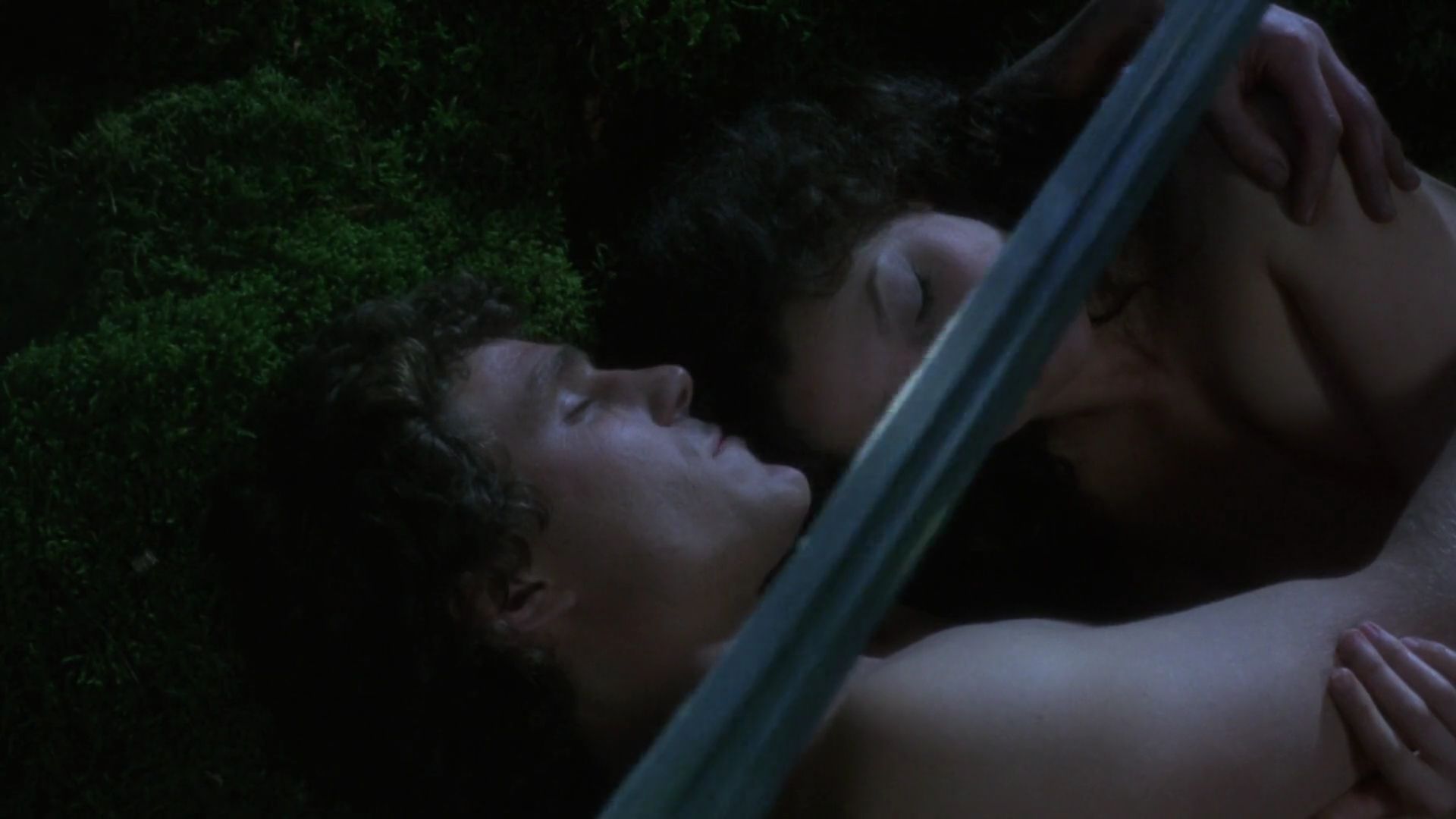
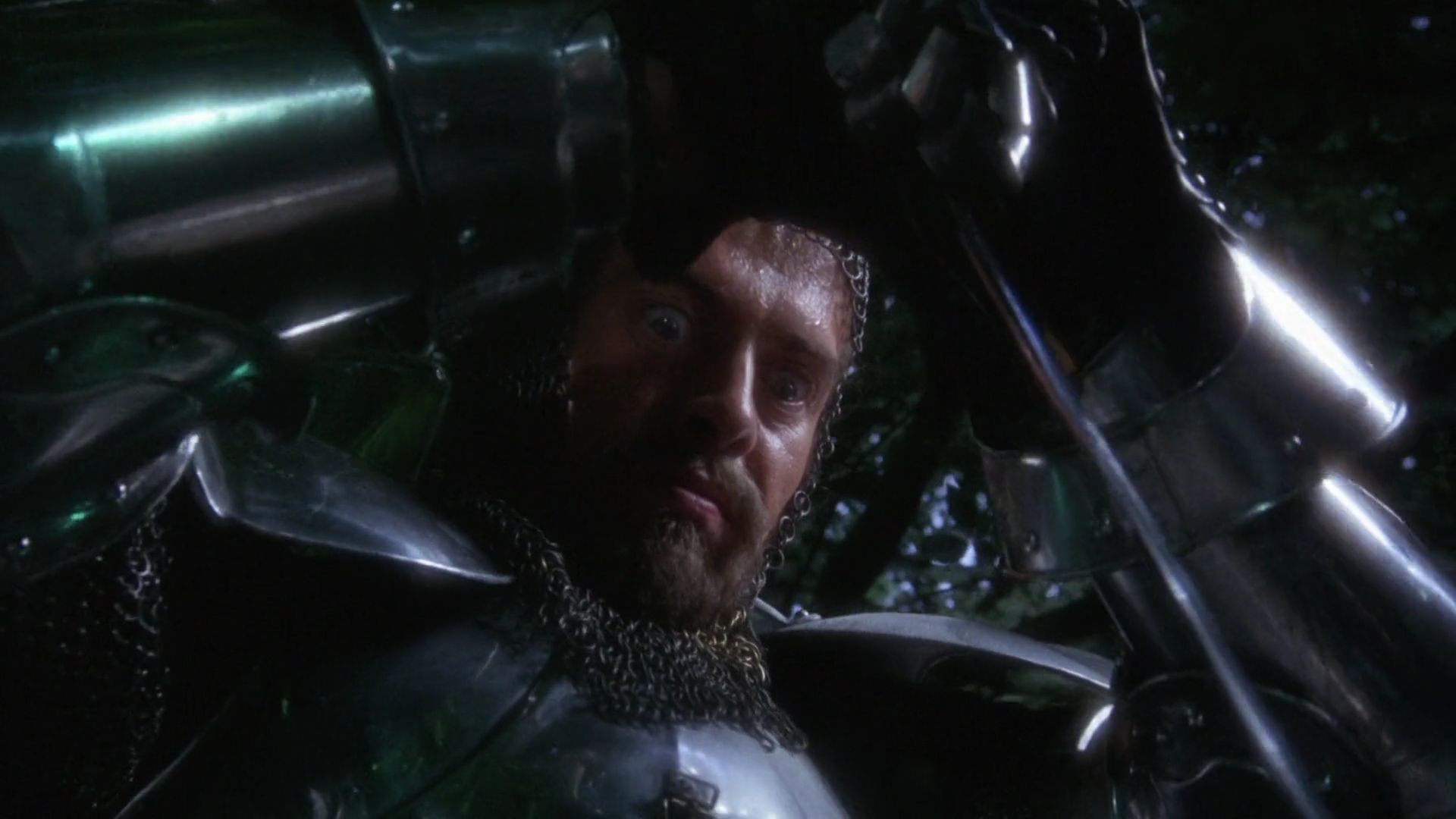
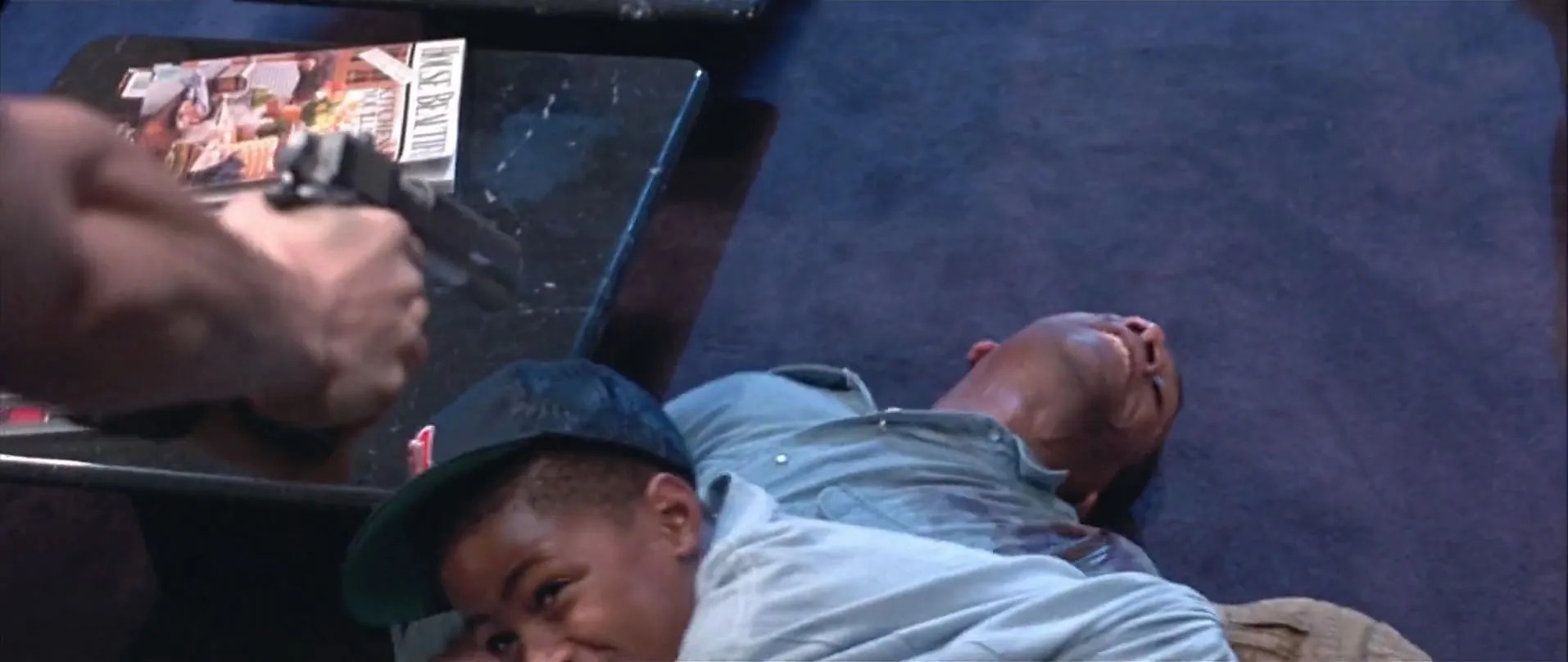
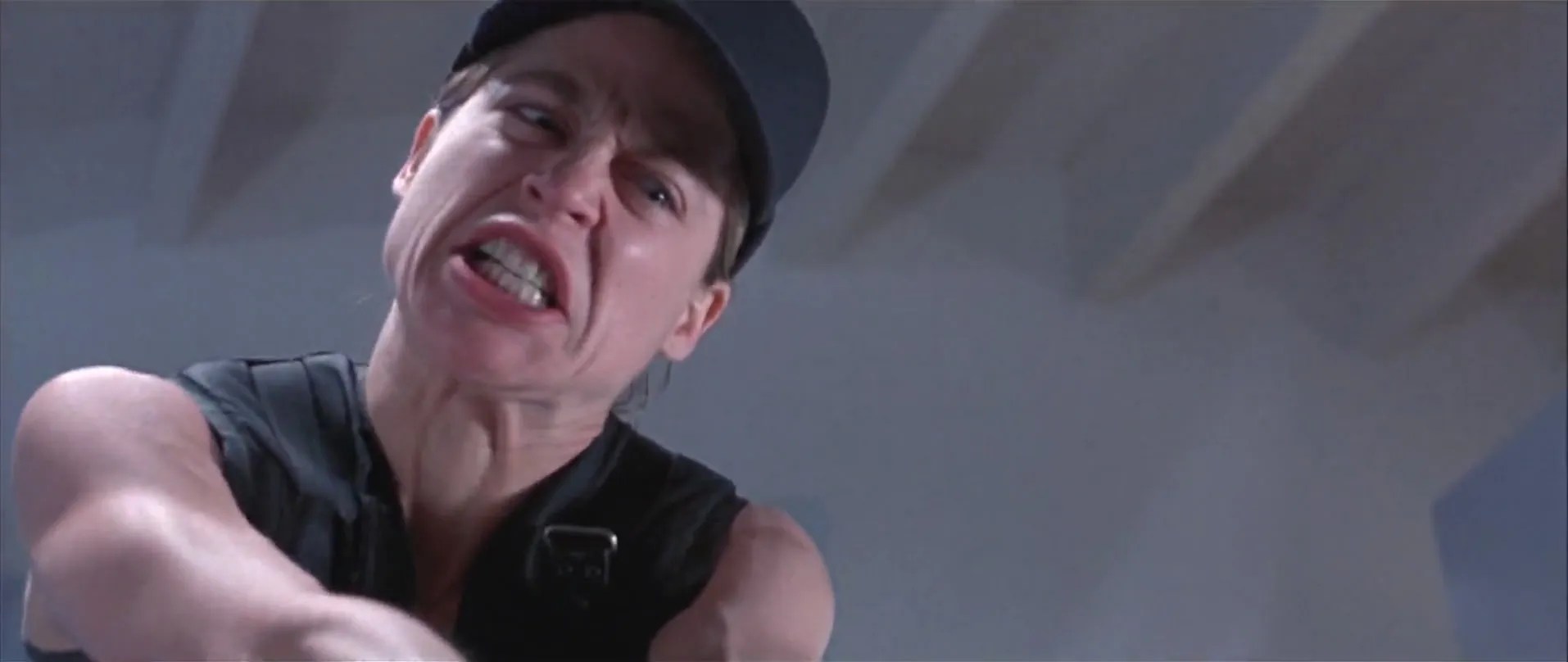


This scene resembles the sequence in John Boorman’s medieval fantasy epic Excalibur (1981) where King Arthur prepares to kill the helpless Lancelot sleeping beside Arthur’s beloved Queen Guinevere, but is unable to, saving his soul by rejecting his rage. Like in Batman v Superman, the two knights united to fight evil. Similarly, just as Lois is positioned as Queen Guinevere, she was originally going to form a romantic bond with Bruce Wayne at some point following Superman’s death.
The sequence may also be a reference to the scene from Terminator 2: Judgement Day (1991) where Sarah Connor nearly kills Miles Dyson (played by Joe Morton, who also plays Silas Stone) to prevent a future dystopian nightmare until his son throws himself over him, and she cannot go through with it as she realises she has become the cold killing machine she hates. Considering the similarity of the two scenes and the theme of trying to prevent a dystopian future at the cost of one’s humanity, it would certainly make sense.
It might also be a reference to “The Sons of Martha,” a Biblical poem by Rudyard Kipling.
The first track in this scene is “Why Did You Say That Name?” It is short but extremely important. This is the only other moment in the movie besides the intro where the “Death of the Waynes” theme is played. Its usage creates a link or direct line to the film’s opening scene. It brings to the surface all of Bruce’s trauma along with it. The haunting feminine vocals in the opening scene entered when Joe Chill turned his gun on Martha, and now they return here to again represent Bruce’s late mother, technically saving his soul from beyond the grave. This track and the previous together make up “Black and Blue” in all commercially-available versions of the score.
The second track in this scene is “Time is Running Out” (2:06). It’s a fairly mild track, with the themes more or less playing to reflect whoever is being featured at any given point. Superman Theme C plays when the two heroes reconcile, the Bat Ostinato plays when Batman goes to save Martha, and the Codex Motif (effectively the Kryptonite Motif at this point) plays when Lois turns her attention to the spear. This track is not on any commercially-available version of the score.
BEHIND THE SCENES
During an interview with Hollywood Reporter, Amy Adams implied this was her favourite moment in the movie to shoot…
“I can’t give too much away, but I’m coming into a scene and Batman and Superman are both in the scene, so I can say that. And it was just fun. Because they had been working together for a couple weeks and just running it, seeing this dynamic. I’ll talk about this when we’re promoting the movie and we can tell more.”
Amy Adams, Hollywood Reporter, 20 October 2015
The exterior and lobby of Wayne Station was filmed at Michigan Central Station, 2198 Michigan Avenue, Detroit, Michigan. Key second assistant director Misha Bukowski visited the location in December 2013, and key specialty costumer Douglas J Stewart was there in April 2014. Construction and filming started in September around the 17th, Lois’ arrival via helicopter was shot on the 20th, and filming continued until the 26th. The shoot was covered by MLive (with photos) and WXYZ-TV Detroit (with video). A local visited the set in the day. During their time shooting, innumerable stunning photos of the location were taken and posted by Zack Snyder [1/2], set photographer Clay Enos [1/2], key specialty costumer Douglas Stewart [1/2/3/4/5/6/7/8], additional second assistant directors Maggie Callis [1] and Ryan J Pezdirc [1/2/3], and set costumer Kate Abraham [1/2]. British Cinematographer’s interview with the film’s director of photography Larry Fong has a photo of Fong on the set.
Chris Terrio and Zack Snyder were looking for the key to making Batman see the humanity in Superman. Terrio noted that, in the comics, both characters have mothers of the same name. Realising they had struck gold, the two began planning how best to execute the scene to use this detail. Terrio’s involvement means this resolution was absent from David Goyer’s original screenplay, so we can only speculate how their conflict originally came to an end.
“Chris Terrio and I, we knew we had reached that point in the movie, in our discussions, where we knew how to get them to fight, right? How would you get them to stop fighting? That’s a tough one. We were drilling down on their humanity, Batman realising that Superman is not just a creature, and that he’s a man, and in a lot of ways he’s more human than you. He’s embraced all of the good parts of the human race. In a lot of ways, Batman is not, and that is how we started to talk about it. Then it was actually Chris who told me, ‘You know, isn’t it weird that their mothers have the same name?’ ‘That’s crazy! Is that true? It is true!’ And that’s how it started, and then we started to talk about how it could work and if it was Lois that said the thing it’s better.”
Zack Snyder, Zack Snyder: The Director’s Cuts, 24 March 2019
“Although we did have an idea that maybe Martha didn’t die and that she got put in witness protection in Kansas. [Laughs] I’m just saying. Felt like it was possible. Anyway, you can only push it so hard.”
Zack Snyder, Zack Snyder: The Director’s Cuts, 24 March 2019
“Clearly I am a fan of and are very interested in how that concept is central to the film. It’s 100% the lynchpin that holds the entire movie together, and I think it is indicative of the way that Batman v Superman was received that its central tenant was belittled and made fun of. I personally think it is this beautiful, incredibly symmetrical idea that completely finishes it as a concept. It is all is 100% with intent and intention to be all the images that you see as far as their inspiration and stuff like that. I’m certain there’s a lot of cinematic reference that we have, as well as classical, and Citizen Kane certainly would be among the things that we would and do look at as iconographic benchmarks that people would be able to link into as a way to help with a secondary storyline. That is to say that the images exist here, but the images they evoke are deeper. It’s like every image that you see — and we endeavoured carefully — each image you could take a dive on and find, whether it be a cinematic reference or mythological or historical, we really try and support the movies in that way as much as possible.”
Zack Snyder, I Minutemen, 12 February 2021
“When Chris Terrio and I were talking about it, he said, ‘Do you know their mothers have the same name?’ I was like, ‘Oh, that’s crazy, I never thought about that!’ And he goes, ‘Yeah, like, imagine that Batman sees Superman as an alien, as a monster, but realises that his dead mother has the same name as this thing that he considers non-human. Like, that’s going to get him!’ and I’m like, ‘That is going to get him. That’s amazing!’”
Zack Snyder, GQ, 18 April 2024
This scene remains the most misunderstood and misinterpreted sequence in the film. Zack Snyder, however, has taken the criticism in stride.
“What can I say? It is what it is. We felt like that was the perfect bond between these two guys. Pop culture really wanted to have fun with that movie, they felt like kicking that movie in the crotch and it is what it is. I don’t know what to say other than, ‘Oh, well.’ You know, we still love it, and we think it’s really cool, Chris [Terrio] and I have no ill will toward anyone who wants to make a Martha joke. I’m just glad they’re still talking about it — whatever this is — six years later. Like I said, I guess I don’t know a lot of movies six years later where everyone’s going like, ‘Oh, yeah, what about that Martha thing?’ I’m like, ‘Geez, okay, cool, I’m glad you care that much!’”
Zack Snyder, DC Cinematic Cast, 9 March 2021, 49:34
“Probably Martha was the one that really made me go like, ‘Really? That’s it? That’s the thing that cracked you, broke you out of the thing?’ Because Chris Terrio and I talked about it. It’s obvious, if you disagree with the concept that Batman sees in Superman a kindred spirit because he sees him suddenly as human because both their mothers share the same name, I don’t know a more human thing that was going to happen in that moment. The truth is, I don’t care, but the other part of me says I do. It’s just interesting. There are certain things that catch me out where I’m just like, ‘Okay.’”
Zack Snyder, Josh Horowitz, 18 April 2024
The scout ship entrance checkpoint was constructed as an outdoor green screen at the late Michigan Motion Picture Studios along Centerpoint Parkway, Pontiac, Michigan, directly across the street from the LexCorp location. Military vehicles present were real. On 4 June 2014, with a week’s notice, extras signed up for military roles were called for fittings in preparation for 11th shooting all day into the night for the checkpoint sequences. The shoot was then rescheduled for the 13th due to rain. Set photographer Clay Enos and electrician Erica Kim both got photos.
 Snyderverse Analysis