BATMAN V SUPERMAN: DAWN OF JUSTICE
DIGGING UP SNAKES


“It’s like a one-man reign of terror,” we hear Clark say in the previous scene.
Cut to Perry at the Daily Planet, sitting at a conference table and surrounded by seated employees. A wall of framed newspaper stories is behind him. He looks annoyed.
Sitting adjacent to Perry, Clark goes on. “This bat vigilante has been consistently targeting the port and the adjacent projects and tenements, and as far as I can tell, the cops are actually helping him.”
- Considering Clark has just recently experienced growing anti-Superman sentiment, the discovery that a violent vigilante like Batman is receiving support from the police likely incites a great deal of personal resentment in Clark. He is receiving the scrutiny and controversy that Batman does not, all while Superman tries to uphold the law, adding a small layer of personal investment to Clark’s dislike for Batman while also keeping him motivated by selflessness. So Clark’s motivation is being built here.
- Samuel Otten pointed out how Clark referring to Batman as a “bat vigilante” avoids using his hero’s moniker to position him as a mere criminal and nothing more.
- Clark’s words clue us into the fact that most of Batman’s activities recently have been focused on the port of Gotham introduced to earlier, and has been operating there for some time to hunt down the White Portuguese.

Perry gestures dramatically as he responds sarcastically, “‘Crime wave in Gotham.’ Other breaking news: Water, wet.” This is the film indicating that Gotham is indeed an extremely crime-ridden city, like in the comics. It also elicits a humoured chuckle from Jenny, sitting beside him. Then Perry asks, “Did you file the football yet?” That is where Perry’s priority lies. That is what the world is more concerned with. Sports.
Clark looks frustrated. Ignoring the question, he asks, “Why aren’t we covering this? Poor people don’t buy papers?” Less focused on fighting the villain of the week, Clark’s desire to help the poor and less fortunate is both endearing and a classic Superman trait from his early days that is being resurrected here.
Perry chuckles before giving Clark a stern look. “People don’t buy papers, period, Kent.”
Clark persists: “Perry, when you assign a story, you’re making a choice about who matters and who’s worth it.” He says this with a degree of righteousness in his look, yet softness in his tone. Though Clark may have personal resentment for Batman, he is ultimately motivated by the knowledge that he is a dangerous menace to the people of Gotham. It is also likely a call-back to Kahina’s words on the television, “To look him in his eyes and ask him how he decides which lives count and which ones do not,” and it shows that Clark has acknowledged this new controversy and is trying to learn from it — to better himself. This is part of becoming Superman, seeking out the unheard and giving them a voice.
“Good morning, Smallville!” snaps Perry, using the patronising nickname normally invoked by Lois in the comics. “The American conscience died with Robert, Martin, and John.” Perry is criticising Clark for being too idealistic, bringing up the deaths of Robert Kennedy, Martin Luther King, and John Fitzgerald Kennedy; various individuals in American history who were renowned for taking a stand for civil rights or being considered champions of progress. The reference to the death of JFK also foreshadows Superman’s comparably significant death and the tragic impact it will leave on the world, the first of many such references. With this line also comes the insinuation that the “American way” that Superman is meant to stand for is outdated. Clark’s determination on fighting for the poor shows he has not given up on that ideal.
“They all love [Batman]. The American conscience died with the Kennedys.”
Pundits, The Dark Knight Returns, 1986


“Sorry. I’m sorry,” we hear Lois say, closing conference room door as she enters, her jacket slung over her arm. She moves over to Perry, holding up a little plastic bag containing the bullet from the Nairomi incident. She says, “No match. My guys in the crime lab never seen one before.”
Perry snatches the bag and looks it over. “It’s called a bullet. You shoot people with it.” He hands it back to her.
Boastfully, Lois explains, “Recovered from the scene of the firefight in the desert. Not sold anywhere commercially in the world, even black market.”
“So?” asks Perry.
Lois responds, “So, who gave prototype military rounds to Tuareg fighters in the Sahara?”
“You’re the reporter. Tell me.”
“I think the US government is arming the rebels while claiming to support the elected government.” Indeed, as we later learn, this is very close to the reality, as the military was using the Nairomi rebels to test the prototype rounds. Of course, it was also LexCorp that manufactured the bullets and supplied them to the military.
Clark looks thoughtful as she speaks, realising the kind of hot water Lois has found herself in.
Perry loudly and impatiently demands, “The ask, Lois!” Clearly, all Perry wants is whatever gets Lois her juicy story and has no patience for the details.
She turns and looks over at Clark, who looks between her and Perry before averting his gaze.
Lois turns back to Perry, smiles, takes a breath, and says, “Flight to DC tonight. Couple of days there.” This is setting up Lois’ meeting with Swanwick, where we will next see her.
“Go,” says Perry, quickly. He adds, “Coach. No extra legroom.”
Lois turns and heads for the exit before he is even done talking. She opens and steps through the door, seemingly okay with this condition, and nearly closes behind her before she abruptly turns back with a raised finger asking, “Economy plus.”
“Coach!” yells Perry.
This exchange helps to build the casual relationship between Perry and Lois. For those who don’t understand, “coach” refers to the cheaper section that makes up the majority of seating on a typical large passenger airliner. “Economy plus” is the space typically between coach and first-class, with a slight increase in leg room and sometimes a few additional amenities. Lois is essentially asking for a more luxurious flight. However, the times have not been good to the Daily Planet, and Perry cannot afford to pay for a more luxurious trip.


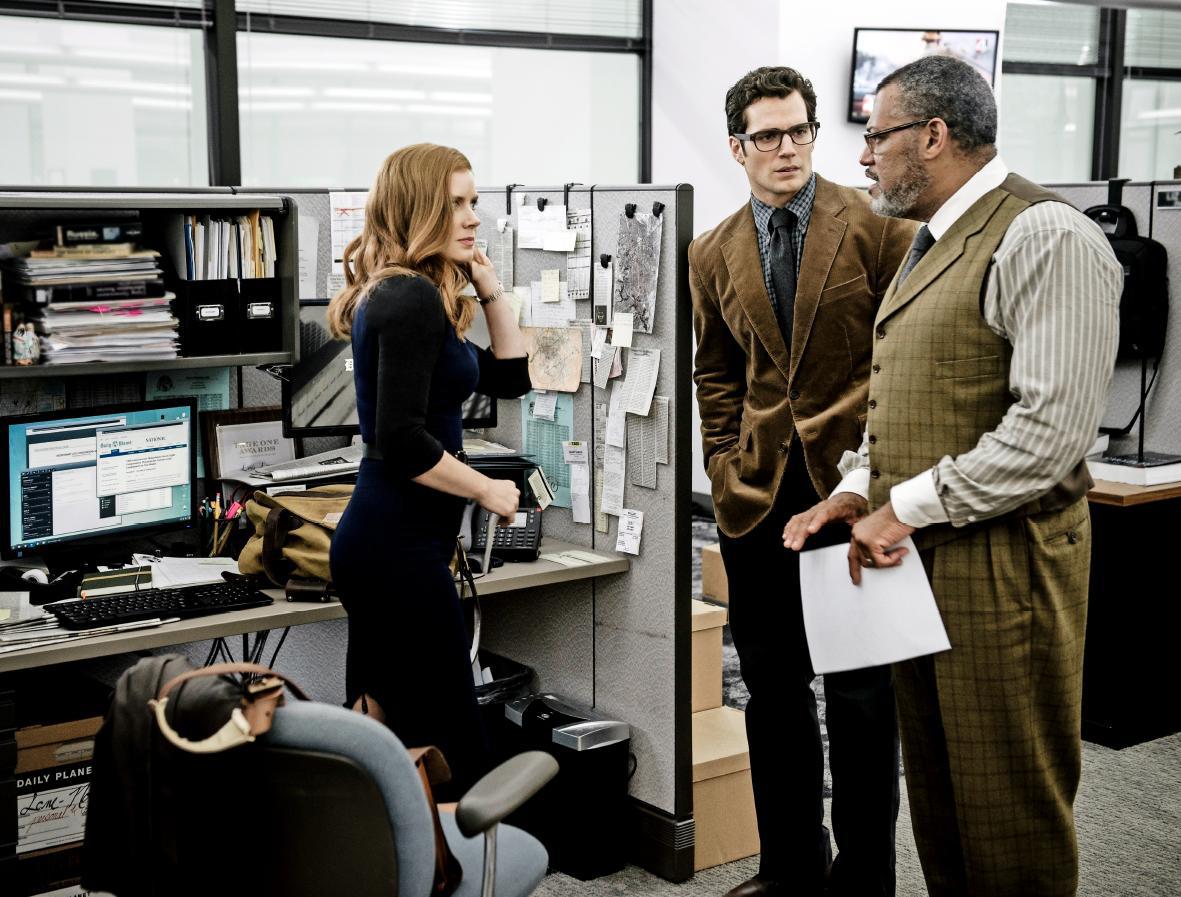
Cut to Lois’ desk, where she places a duffle bag to begin fiddling around inside as Clark ask, “So, why didn’t you tell me?”
Lois smiles, ignoring him as she works.
Clark leans beside the cubicle wall, hands casually in his pockets. “You’re digging up snakes, Lo. It’s kind of dangerous,” he warns. The use of a nickname here shows how comfortable they have become with each other.
Looking up from her things, Lois brushes her hair back. “That is why I didn’t tell you,” she responds, sounding a little frustrated, but she still cracks a smile.
Goof + Possibly Deleted Footage
In this shot, Lois is over her duffle bag. In the next, she is facing Clark, suggesting some dialogue was deleted. The location of her duffle bag has also changed.
“Lane, don’t you have a plane to catch?” interjects Perry. He has approached beside Clark, a sheet of paper in his hands where his gaze is focused.
“Yes, sir,” replies Lois, grabbing the duffle bag and turning to leave.

Now watching her leave, Perry hands Clark the paper. “Benefit for the Library of Metropolis,” he says. During Black Zero, the Metropolis Public Library was destroyed in the chaos, so the benefit is likely for its restoration.
Lois looks over her shoulder to flash Clark a final smile as she heads down the aisle of desks. Her gracious amusement at Clark’s protectiveness indicates both that she is grateful for his concern yet is still frustrated by his intervention, especially considering we learn later that she feels guilty about what happened in Nairomi.
One desk in this shot is marked “Jay Oliva, Sports Writer”. Jay Oliva is an animated film director and storyboard artist for BvS who has also expressed his profound support for this film, Zack Snyder, and the Snyder Cut on his Twitter. He also mentioned the name cameo. Below the name tag is a jersey for the Gotham football team. One can speculate that Oliva, being the dedicated sports writer for the Daily Planet, needed a break after the crushing defeat of his preferred team, hence why Perry put Clark on the job of covering the game. Snyder confirmed that the number on the jersey, 11, was the same as his son Eli Snyder’s during his time as a football player in high school. Further down the aisle is a desk marked “Patrick Tatopoulos”, the film’s production designer.
About the Library of Metropolis benefit, Perry continues, “Someone on the committee requested that Clark Kent cover it.” Almost scoffing as he finishes, “Probably some old charity crone who’s got a thing for nerds.” Of course, Lex is the one responsible for the invitation, which leads us to the next scene. Perry’s description of Clark as a “nerd” is also a little comic book detail that reinforces how Clark is, as his appearance indicates, somewhat of a geek compared to his fellow journalists. Perry turns to leave down the other direction.
Clark looks ahead after Lois, concerned.

SCENE OVERVIEW
At the Daily Planet, Clark reveals he is now working a story on the Batman, motivated by the terror the vigilante strikes in the citizens, building Clark’s admirable qualities and following his footsteps in the original Siegel and Shuster comics. However, rejected in front of his co-workers to build sympathy, Clark now faces down the cynicism of modern media and its prioritising of monetary gain over truth and justice. At the same time, Lois reveals she is now investigating the bullet and — despite protests from an overprotective Clark — heads to Washington to pursue her hunch.
SCENE ANALYSIS
Scene analysis coming soon.
This scene has no music.
BEHIND THE SCENE

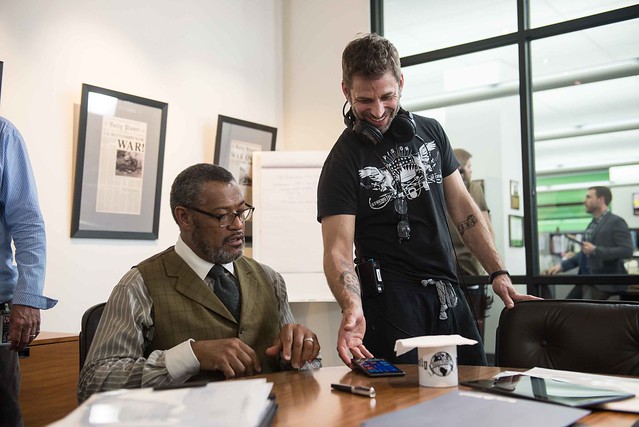
Based on physical evidence and quotes, the Daily Planet was shot in a retrofitted office space at 2000 Centerpoint Parkway, Pontiac, Michigan, in the late Michigan Motion Picture Studios, a former General Motors building just across the street from the location used for LexCorp. Those with a keen eye for set design may notice a significant number of changes since Man of Steel, implying the building has been heavily remodelled. Updates were inspired by old photographs of the Chicago Tribune. A row of televisions across the walls makes current news updates a constant presence in the scenes here. Lois and Clark can see each other from the placement of their desks. Electrician Erica Kim got a photo from inside. The location was sold to Williams International in 2017, when the studio held a garage sale for props.
 Snyderverse Analysis