BATMAN V SUPERMAN: DAWN OF JUSTICE
BEAUTIFUL LIE


We start in black. The film opens on the Warner Bros Pictures logo, styled like a stone carving. As the logo moves away to fade out into the blackness, a solitary autumn leaf drifts down from above, telling us the season. Then the RatPac Entertainment logo fades in and out, also in stone grey. The DC Comics logo, again in the same style, is further accompanied by more falling leaves: symbols of death, falling from dying trees.
The music begins with with the 6-note Batman Theme A softly on piano — the foundation of Batman’s new theme song.
Then we hear a sombre monologue from Bruce Wayne, saying, “There was a time above, a time before…” This immediately puts in our minds the idea of better times past.


We exit the black by pulling away from the roof of a shining black casket, a crane establishing shot rising up in line with the dialogue to oversee two caskets carried in a procession of black-clad mourners to a mausoleum beside a small cemetery, telling us the deceased are of high status. The wind is howling, rustling the autumn trees as leaves continue falling on the scene.
Batman Theme A is soon overlaid by the haunting 3-note Bruce Wayne Motif, also on piano. It sounds similar to the Earth Motif from Man of Steel, but colder and harsher in contrast to the Earth Motif’s warmth and gentleness.
Bruce’s monologue continues. “There were perfect things, diamond absolutes.” The past was a better time, where certain ideas and values were simple and straightforward. There was no ambiguity or shades or grey, and the line between right and wrong was crystal clear. After a pause, Bruce continues, “Things fall, things on Earth…” Things changed, and those bright days died.
Cut to another high angle beside the mausoleum, looking at the procession from the front now in a new establishing shot revealing the overcast sky and Wayne Manor standing in the moody background. In association with Bruce’s words, the camera descends now as we see, at the head of the column, a young Bruce Wayne (Brandon Spink) breaks away from Alfred Pennyworth to flee.
“And what falls…” continues the monologue.
“Master Wayne!” exclaims Alfred, quietly, as he pursues.
The monologue concludes: “…is fallen.” These words establish the movie’s “falling” motif verbally, which is shown visually throughout the story to symbolise a regression in the status of the characters in one form or another, typically a descent into cynicism for Superman or a descent into villainy for Batman.
The diamond absolutes clearly represent his former more optimistic and simplistic outlook of good versus evil before the lines became blurred for him. In short, he is saying that things used to be simple and uncomplicated, but those days are over. The establishing of the falling motif in the minds of the audience also allows them to associate that subconsciously with ample “falling” imagery throughout this scene. Superman’s logo is also diamond-shaped, possibly indicating the ideal Superman represents that Batman no longer does.
“Bruce!” yells Alfred, using his first name to create a more personal connection between them.
As we descend into the tall grass around the mausoleum, we turn right to follow Bruce as he dashes into the woods, his environment alive with chaotic motion from the wind to embody the young man’s turmoil. Our last shot of Alfred shows him coming to a stop, relenting in his pursuit. Bruce runs by a few tombstones, one engraved with the name Solomon Grundy and the words “Born on a Monday,” referencing the Batman villain Solomon Grundy and his associated nursery rhyme.
As Bruce disappears into the woods, we hear Alfred’s words echo and fade, “Bruce, it’s alright!” No, it is not alright. “Bruce, please!”
Cut to Bruce running through the foliage, throwing aside branches in his way, as if in a panic. We cut to an over-the-shoulder view, tracking him through the forest to keep building the intensity of his escape.
We transition to black through the passing swipe of a thin tree trunk.


Top-down shot of a movie theatre entrance, the autumn leaves replaced with falling snow, now in slow-motion. The film’s title is revealed in the black space on the right of the frame, standing out against the darkness. Here, the music changes to the Batman Tragedy motif in sorrowful descending piano chords. A couple and their son step into view from below the marquee.
The repeated Batman motif transfers to lower-voiced instruments while a new theme representing Bruce’s parents and their deaths is introduced on piano. This theme only occurs in one other place in the entire score. It is a tragic, fateful, descending series of chords on piano, accompanied by strings. The gradually falling notes throughout associate with the “falling” motif of the scene.
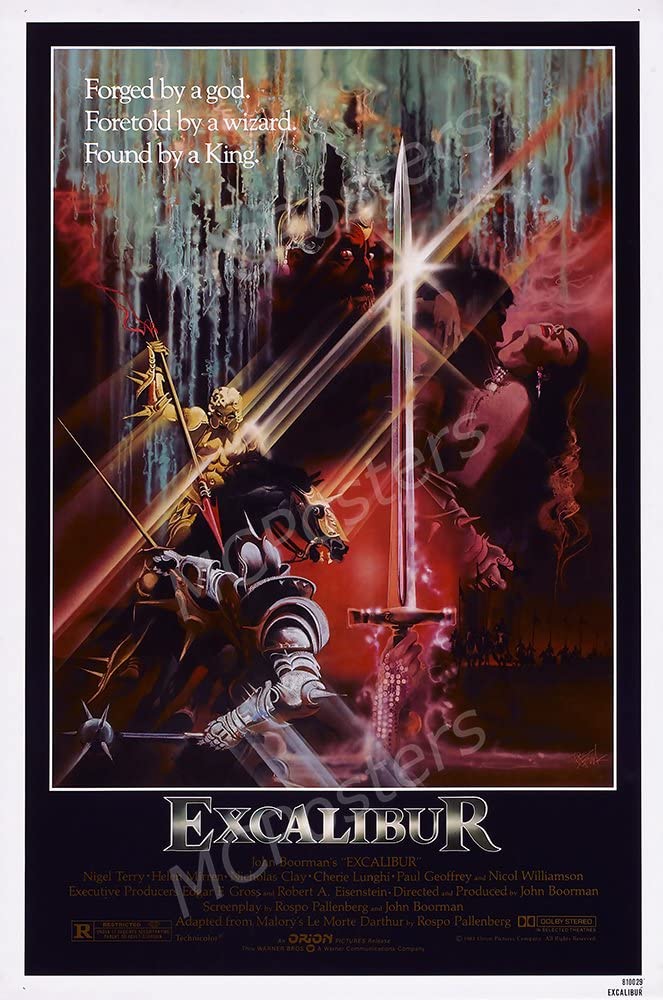
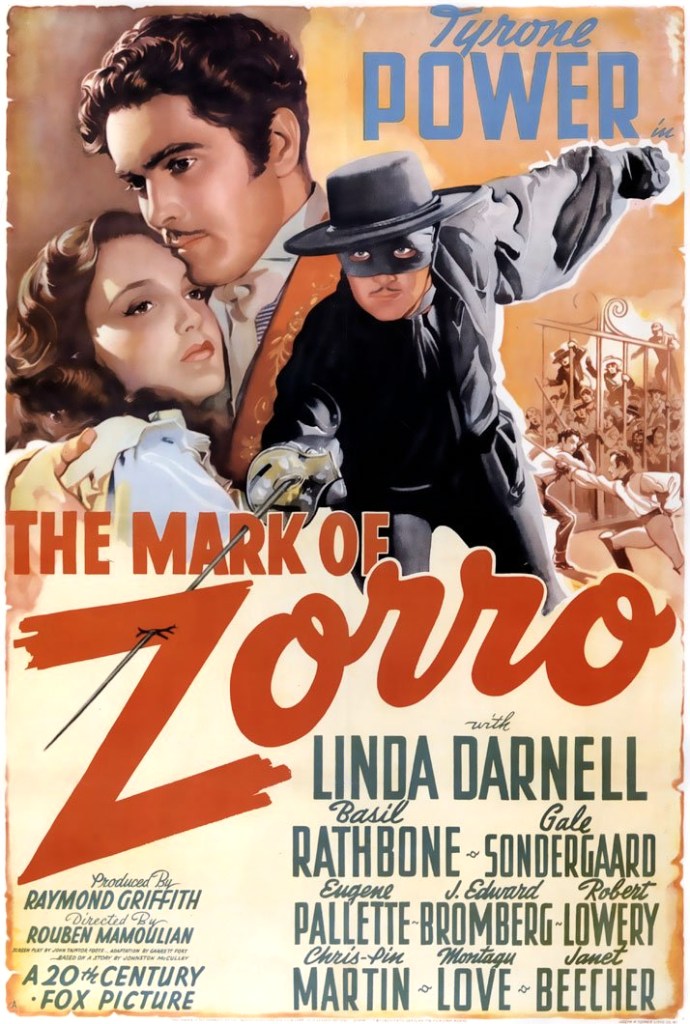
Beside them, the first poster on the building’s wall is for The Mark of Zorro (1940), a film depicting a wealthy man fighting for justice in a black mask. In DC canon, this was the film that young Bruce Wayne watched with his parents at the theatre before they were murdered, and is also the only time in the live-action cinematic history of Batman where this comic book detail has been adapted. This can also be seen in The Dark Knight Returns (1986), which heavily inspired this movie. The Mark of Zorro is now showing according to the poster, so this is likely the film the family just saw. The second poster is for John Boorman’s Excalibur (1981), which is Snyder’s favourite film and is also on the marquee. Excalibur will be highly relevant to this film’s themes going forward. Fade to black.
“We have The Mask of Zorro which has long been associated with Batman. The way Zorro leaves his mark, I wanted to kind of use that concept in the film. The beauty of Zorro is that he is also a vigilante who wears a mask. There’s a lot of parallels. It’s always been a cool reference for how [Bruce] got the idea to become Batman. As well as Excalibur, you see there, is a big influence on this film. Batman is Lancelot, Superman is Arthur, I would say, and you can take that metaphor as deep as you want. It’s pretty archetypal and these heroes are pretty archetypal”
Zack Snyder, Batman v Superman: Dawn of Justice, Director’s Commentary, 2021, 00:56
Fade into a low-angle shot of Thomas (Jeffrey Dean Morgan, who portrayed the Comedian in Zack Snyder’s 2009 cinematic adaptation Watchmen) and Martha Wayne (Lauren Cohan). We track them, following the happy family down the street as they exit the theatre. They are dressed warmly and look very satisfied after their viewing. Thomas looks down at his son, muttering something we cannot hear as the tragic piano chords rule the tone of the scene. They pass by a door with the street number 1108, a possible reference to 11:08 in the Book of Revelation: “And their dead bodies shall lie in the street of the great city, which spiritually is called Sodom and Egypt, where also our Lord was crucified.” Later, Superman will die in Gotham. Fade out.
Fade into a two-shot medium close-up on the faces of the couple, the latter of whom seems to laugh somewhat.
Fade out and back to to a medium close-up on young Bruce, his father’s gloved hand over his shoulder. This whole picture of the Wayne family, represented in three shots, is wholesome and warm, but the atmosphere and music of the scene is fully acknowledging the coming tragedy. However, the slow-motion also makes it feel like an ideal moment for the family, and seeing this interaction contributes to the weight of coming loss of innocence. Fade out.
Contrasting the last shot of Bruce full of joy, we quick-fade into a ground-level shot of Bruce’s feet, tracking him through the forest as he runs. His strained panting is echoing. Time is restored to normal here, as is sound (minus the echo accompanying every fade), contrasting the past slow-motion tragedy with the “present” funeral. The music builds, maintaining the motif but growing more dramatic.
Cut to an over-the-shoulder close-up on Bruce, his face hidden from view as trees rapidly pass by between us and the character. We fade out with yet another swipe from a tree.


Fade into another top-down shot of the street, panning up from the family to see the elevated railway overpass ahead of them, showering sparks from electrical damage beneath. The sound is back, and we hear the rattling of the train passing up ahead, or the car driving up the road on the right. These details serve to drain away the warmth from the scene by focusing on the grime and steel of Gotham City, transforming the environment into a more unwelcoming atmosphere for the family. The lighting here also creates a circle in the frame, bordered by darkness, like a spotlight framing the scene of the murder. Fade to black.
Fade into a hip-level shot from under the railway behind a stranger in a high-collar leather jacket, peering around suspiciously. The silhouettes of the Waynes approach in the left background. This immediately puts the Waynes in danger psychologically, the man’s silhouette towering over the unfocused family behind him. This is Joe Chill, the murderer of the Wayne family from the comics (portrayed by the film’s stunt coordinator Damon Caro, who also played a mugger in Zack Snyder’s 2009 adaptation Watchmen).
Zack Snyder: No, but it’s cool. Because I like Damon in the movies. He’s actually a good actor and he’s always very humble, but I just like putting him in movies, so I was like, ‘Oh, you should be Joe Chill! You should kill the Waynes!’ and he was like, ‘Okay, I guess. If I must.’ It was freezing. It was so cold. But yeah, he did a great job. It was Chicago and it was the coldest time ever. It was so cold.
Damon Caro: Everyone behind camera, you could see literally maybe their eyes? They had giant parkas.
Zack Snyder: Yeah, we were on an Arctic expedition and they were just like normal people. He was in, like, just a leather jacket.
Damon Caro: Well worth it, but yeah, it was a chilly evening.
Full Circle, Batman v Superman: Dawn of Justice commentary, 29 April 2023
Fade out on the echoed sound of a gun cocking, and fade into a hip-level shot beside the man’s pistol, a Colt M1911A1, now aimed at the three. Courageously, Thomas removes his arms from around his wife and son and steps forward protectively to shield his family from the gunman.
Cut to an extreme close-up of the pistol, a blurry image that fades into clarity as we look down the muzzle. This is the gun that killed Bruce Wayne’s parents, and the film wants that in our heads by emphasising the significance of this weapon.
The music ramps up yet again — louder, more dramatic, and more tragic.
Then we cut back to the forest again, still tracking Bruce at shoulder height from the side as he sprints by the foliage.
Then we cut to a knee-level full shot of Bruce running in our direction between the trees, and we turn left to follow him, our first large shot in the “present” since the opening shots. From this distance, we can clearly see the leaves still falling.
Cut to a top-down shot, watching Bruce run below us as we stay on him. He trips and grunts as he hits the ground.
Cut to a full shot of him from the front, seeing him climb to run again. The camera ascends as he passes by underneath, but we follow with a pan down, literally turning both the camera and Bruce’s world upside-down.


Cut to the street, a medium close-up on young Bruce’s concerned face. Thomas balls a gloved fist, emphasised by the sound of stretching leather.
Fade cut to Thomas’ face, exerting with his face.
Cut back to Bruce, where Thomas’ fist is thrown forward to strike their assailant. Thomas Wayne attempting to defend his family is accurate not only to The Dark Knight Returns, but to the earliest Batman comics, particularly Detective Comics #33 (1939) and Batman #47 (1948). It may also have left an impression on Bruce growing up to think with his fists, drilling violence into him. In that sense, he is a product of his father’s actions, as Lex Luthor and Superman are too.
“I like also the duality that that might’ve been the reason why they got shot was that he didn’t give his wallet right away. He tried to fight back a little bit, which I think is also a thing that has haunted Bruce in some ways, because I did that shot where Jeffrey Dean makes the fist and it looks like he’s going to try and punch him, and it’s right in front of the kid. I thought that was a pivotal moment from Bruce. How do you confront violence that’s completely life-altering and unfeeling and merciless? You have to sort of become that yourself a little bit.”
Zack Snyder, Film Junkee & Ping Pong Flix Deck the Hall of Justice, 21 December 2020
Close-up down the barrel of the gun, which fires a single shot.
High-angle extreme close-up on the upper barrel, where the ejected bullet casing ejects away. The bang of the firing is muffled, but the clang of the recoil is clear as day. This shot bears a resemblance to a near-identical slow-motion shot of an ejecting bullet casing in Watchmen (2009).
The Waynes’ death theme on piano is accompanied by a rising string melody, abruptly growing more dramatic with the gunshot.
A non-fade cut here back to the forest, a knee-level side tracking shot of Bruce running again, but rotted wooden boards break beneath him and he trips to face-plant the ground on the far side of an open hole in the ground.
Cut to him head-on as we watch the boy slide back into the opening, disappearing into the blackness. Bruce’s fall here coincides with the sudden murder of his father, and is the first of the greater falls in the scene.
Cut to a knee-level wide-shot at the street. Ahead of us, Thomas Wayne collapses backwards from the gunshot wound as his wife and son watch in horror, but the scene is blurry. The only thing in focus is the sparks, falling between us and the characters as if the snow had turned to fire. Fade to black.
Fade in as shattered wooden planks fall aside to give us a below-angle shot of Bruce falling into the shaft, silhouetted by the daylight above. This is the first shot in the “present” in slow-motion.


In connection, cut to a ground-level shot where the bullet shell bounces on the ground with a clank that rings for a few seconds — by now a clear visual motif of things hitting the floor as we approach the conclusion of the scene. This image is repeated again at the end of this film during Superman’s funeral and serves as a very visual representation of death due to its association with the firing of a weapon.
Cut to an over-the-shoulder shot of Bruce focusing on Martha Wayne and Joe Chill. Martha is grabbing at the shooter’s arm to try and wrestle the gun away, establishing that she too is trying to protect her son. The shot opens with yet another shower of sparks from above between us and the characters. As Martha’s necklace flails from inertia, we hear the pearls rattling into the next shot.
Transfers from strings to a feminine solo vocalist to entwine with Martha’s focus in the scene while the descending chords become descending single notes.
Fade to black and out to medium close-up shot of Martha from the side as the gun snags under the necklace during their tackle. According to VFX Supervisor John “DJ” DesJardin, these pearls are CGI. Female vocals come in to entwine with Martha’s focus in the scene, which also factors into her later importance in Batman’s arc, but the rest of the music begins descending in intensity now.
Cut to Martha’s terrifying point-of-view. The pistol and pearl necklace are in focus, but Chill’s face and the background are highly blurred to keep our attention on the weapon. Fade to black.
Fade in to a below-angle in the forest shaft, medium close-up on Bruce’s fearful expression. This serves as a substitute for Bruce’s face during the murder. Still, Bruce’s fall is slow-motion. Sudden cut to black.
Fade in to close-up on Martha’s look of despair. The necklace is hooked over the back of the pistol pointing at her neck. We hear the rattle of the necklace.


Cut to an extreme close-up side angle on the pistol. The gunman pulls the trigger and we hear the weapon fire again, snapping the necklace with the barrel’s recoil, and the pearls go flying with the second bullet casing. This close-up keeps us from witnessing the grizzly detail as Martha perishes mere inches off-screen.
Low-angle medium shot of Martha from behind, falling aside as the pearls fall everywhere. She reveals Chill, looking frozen. We fade to black as Martha falls out of frame.
Connecting Martha’s fall to Bruce’s, sudden cut to a knee-level shot of Bruce hitting the bottom of the shaft on a cushioning bed of dead leaves, normal time. Leaves fall around him in conjunction with the falling hail of Martha’s pearls. The spotlight effect of the light from above illuminates the stone wall, isolating Bruce in a visual “cage” while also evoking loneliness and isolation. Even though Batman has one friend — his faithful butler — he will go about his dark motives in this film with no one at his side.
Sudden cut to black.
The strings, piano, and vocals fade out. The Batman motif resumes on soft piano. The murder is done, felt in the music’s abrupt ending here as the female vocals cut out.


Fade in on Martha’s limp arm falling on the cover of the storm drain, quite literally dying in the gutter as Bruce later mentions. Her fall is accompanied by the many pearls clanging down around her. One falls into her open palm before bouncing off into the drain below, a visual which has been compared to the opening scene from Citizen Kane (1941), where Charles Foster Kane dies and the snow globe slips from his limp hand to smash on the floor below. Fade to black.
Fade into a medium close-up of Bruce, who screams inaudibly at the death of his parents. Fade to black.
The Bruce Wayne motif is played a final two times on a single, haunting, distant trumpet audibly substituting Bruce’s scream. From this moment on, those trumpets in the Bruce Wayne motif will be that scream.
Fade into a wide shot of the scene, putting everything in focus. Bruce stands aimlessly over the bodies of his parents, the Excalibur title on the marquee of the Aragon theatre directly above him. Joe Chill turns and flees on the left, indicating anything from assuming he is going to get caught to the sudden realisation of his own actions based on his shocked expression, which would also tie into Batman’s later realisation of his own, but before he could make an unforgivable mistake. Fade to black.
Fade into a ground-level medium close-up of Thomas, lying on his back as he reaches out to his wife.
Close-up on Martha’s face, dotted with blood. She is expressionless, yet audibly gasping weakly for air.
Extreme close-up on Thomas’ face as he breathes, “Martha.” We hear this loud and clear. This might be a reference to the “Rosebud…” moment from Citizen Kane, as both films are about a powerful man whose desire for power brings him down morally.
The closest shot thus far, we cut to an extreme close-up on Martha’s lifeless eye as it dilates.
Cut to a below-angle shot from inside the drain, Martha’s lifeless hand visible through the grate as the pearls fall into the darkness. Fade to black.


Fade in on a close-up of Bruce’s hand, clenching the leaves as he recovers. Connecting the previous shot with this one, a solitary pearl falls down beside him, a surreal detail already indicating this is a dream sequence. It connects with the pearls falling into the drain, physically placing this location below the sidewalk where Bruce’s parents died. He is essentially in the sewer, beneath even his dead parents in the lowest, darkest place he could possibly be. Leaves are also falling around him, surrounding him in symbols of death.
The distant notes of the Batman motif and the whining trumpets fade away. No music.
Rear shot on Bruce, face in the leaves before he groans to turn.
Below-angle shot looking up at the shaft entrance up above on the upper right of the frame, opposite Bruce’s silhouette on the lower left, raising his hand to shield his eyes from the light above. Snyder confirmed in the director’s commentary (03:27) that this shot homages the Bat-signal.
Close-up on Bruce’s face as we hear flapping wings. Bruce slowly turns his gaze down, eyes on us. The squeaks of bats become audible.
Over-the-shoulder shot, racking focus from the back of Bruce’s head to writhing bat colony ahead as the camera climbs above him. Here, the credits say, “Batman created by Bob Kane and Bill Finger.” This is the first Batman movie to ever credit Bill Finger as a co-creator of Batman, and it is fitting that the creators of the character are referenced here during this scene from which the Batman is born.
Extreme close-up on Bruce’s face looking anxious.
Cut back to the bat colony, the camera closing in on the dark spectacle of squeaking flying rodents.
Back to Bruce, overcome with anxiety. The activity of the bats dies down, and a silence takes over. Bruce composes himself.
Back to the bats, the creatures suddenly swarm at us in a cacophony of squeaking and flapping.
Back to Bruce, he panics and flails his arms.
Rapid cuts from full, medium, medium close-ups, and close-ups of Bruce as the bats swarm around him before he suddenly stops flailing. His struggles cease as he looks up at the light, realising the bats are not harming him.
The music returns with the Bat Ostinato, a quick and frantic series of repeated notes on high strings, much like a group of bats fluttering about.
Cut to a ground-level shot of his shoes as they lift off the ground.
Batman Theme B is introduced on slow, rising notes — the chords now elevating just as Bruce does in contrast to the falling motif prior — layered over a percussive and strong Batman Theme A.
Cut to a cowboy shot, where we see Bruce is being raised up to the exit, his gaze still toward the light, arms out to his sides as the bats seem to carry him in a circling tornado of wings. The sequence is shot as though either Bruce is slowly spinning or we are slowly circling around him.
We cut to below, looking up as he ascends, and the CG artists here even took the liberty of ensuring that the sunlight shines through the wings of the bats. They spiral around Bruce.
Medium close-up on Bruce’s face as he spins, still focused up and calm as the camera dips into a low-angle shot.
The music here, in contrast to the falling notes of the previous track and the persistent visual theme of falling, instead builds with an angry choir, accompanying the visual idea of the Batman persona lifting him up from the darkness. Before, everything was falling. Now, everything is rising.

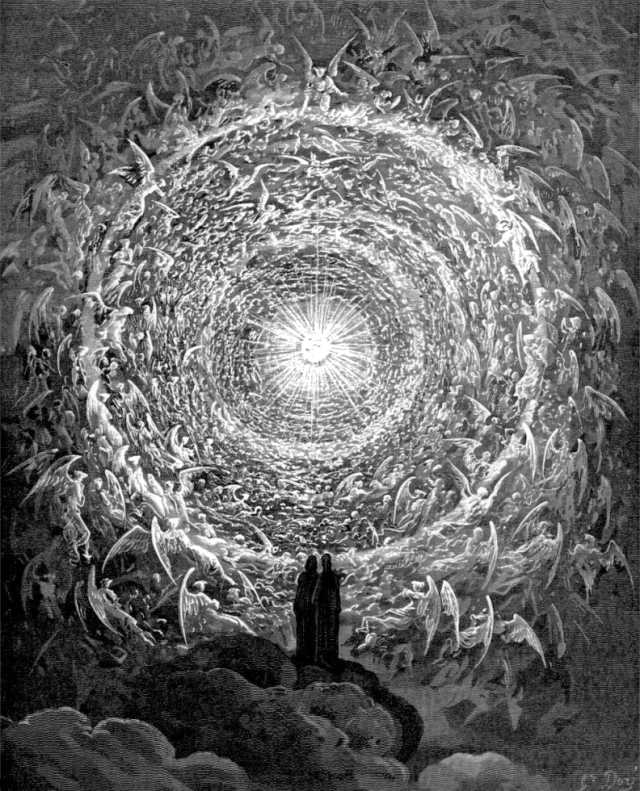
Back to the below-angle shot, Bruce and the bats melding together in a blurring mass of black and white. This may be a reference to an illustration by Gustave Doré (1832-1883) called Paradiso, Canto 34 (1868) for his series The Divine Comedy, depicting Dante and his beloved Beatrice looking upon heaven through a tunnel of angels, which would make it one of at least two Doré paintings referenced by this film. This would make sense, foreshadowing Bruce’s eventual metaphorical rise out of hell, conveyed later by Batman stepping up out of the inferno behind him and into the light following Superman’s sacrifice — much like Dante emerging from hell.
Music cuts out, leaving a quiet, lingering feminine vocal note.
As the scene fades to white (as opposed to black, like most of the scene), we hear the older Bruce conclude his monologue: “In the dream, they took me to the light. A beautiful lie.” Upon the death of his parents, Bruce metaphorically fell into darkness. The beautiful lie is that Batman raised Bruce up towards something good and light, but in reality, he is still consumed by that darkness. There was never any light for him. He fell into that cave and metaphorically never came out.
“The idea is that, in the dream, the righteous man, the good man, seeks justice. But that quest for justice leads him into darkness and his own moral code may be in question or may only be a construct of his grief. So the lie of the light becomes “justice = light.” For Batman, it’s the opposite.”
Zack Snyder, Vero, 29 March 2018
SCENE OVERVIEW
To begin, we are swiftly reintroduced to the pivotal Wayne murder for the Snyderverse without re-treading an origin story. Themes of powerlessness, death, and falling from grace are established by visual drama, music, and limited melodramatic narration to tell the viewer what to expect from here and establish a sombre, operatic tone. Young Bruce’s powerlessness in the face of his parents’ murder forms the cornerstone of his story and arc. For Bruce, the idea of Batman as a being of light was merely a beautiful lie, conveying the deconstructive modus operandi of the movie.
SCENE ANALYSIS
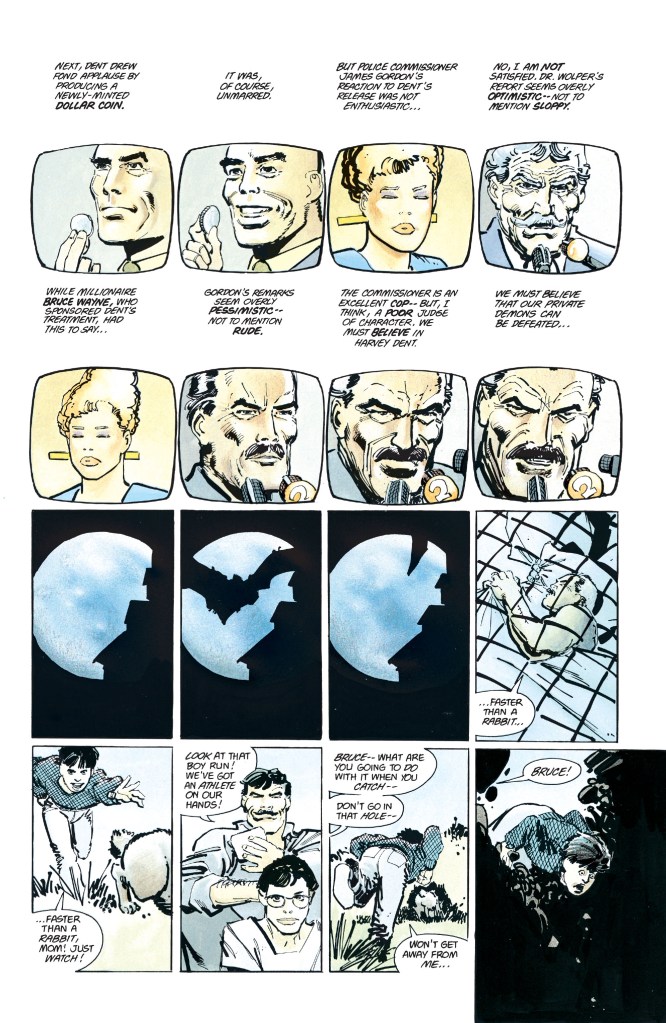
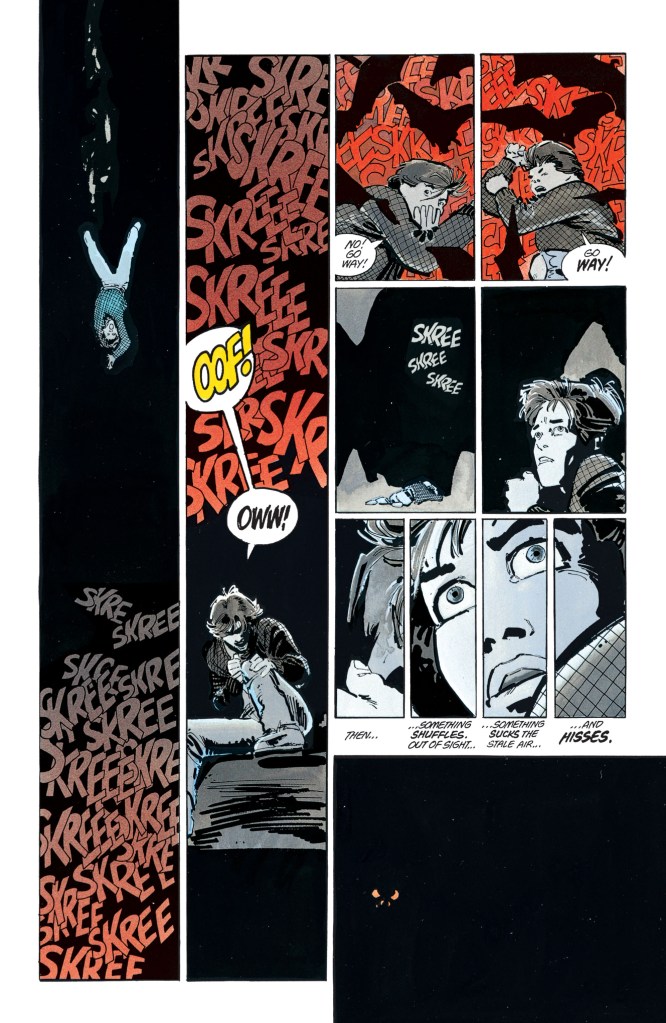
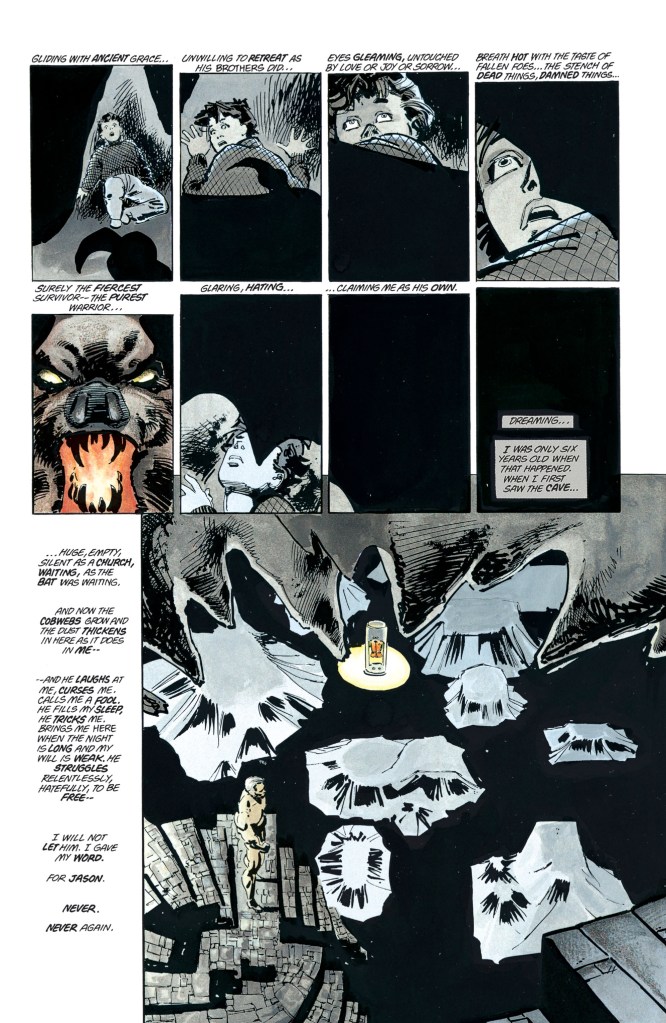
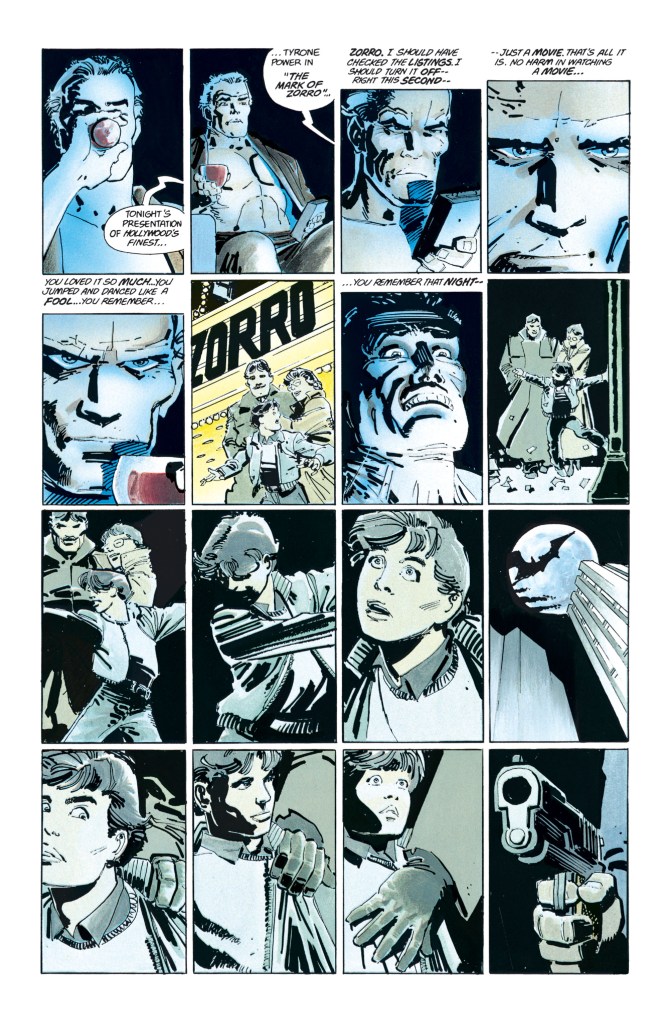
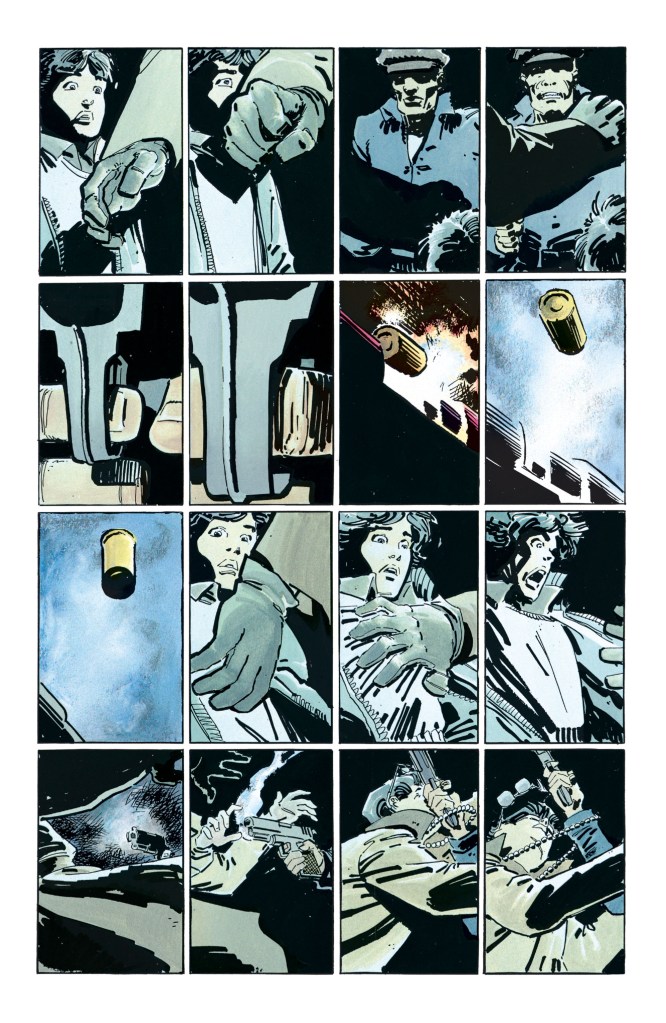
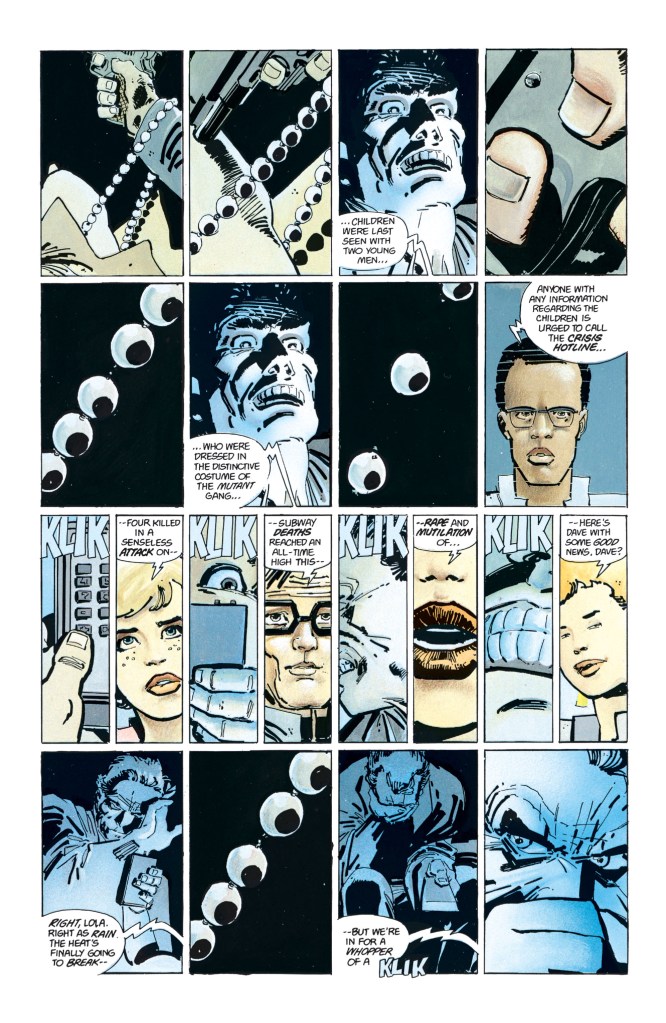
This sequence is heavily inspired by imagery straight from Frank Miller’s The Dark Knight Returns (1986), and this is only the beginning of the visual references to that comic. Take a look at the pages above to see just how much inspiration was taken, right down to angles and ideas.
“I wanted it to be half dream, half reality. It’s memory, but it’s also mythologies. The movie tries to play with those relationships as much as possible. What you remember and what you perceive as reality are not necessarily the same thing. The mythological you and the real you over time become inseparable, and that was a kind of thing I was interested in playing around with in this film. It was cool.”
Zack Snyder, Batman v Superman: Dawn of Justice, Director’s Commentary, 2021, 03:37
The purpose of this scene is to set up the point where Batman’s conflict with Superman is resolved. By introducing Martha Wayne’s death at the start of the film, its inclusion in the story later as a narrative device is necessarily more organic and less forced. Starting the film with the murder also makes this film a convenient alternative to an origin story — telling a Batman story that began that fateful night without retreading the old process of becoming Batman. Though BvS is not an origin story, it thusly still works as an introduction to the character by tying his arc to the moment that birthed him.
“Hence why I wanted to have the death of the Waynes at the beginning of the movie. Just so I could plant the Martha reference in there and get a chance to see Martha alive for the briefest time so that you could connect with her on some level.”
Zack Snyder, Empire Film Podcast, 30 March 2016, 00:09:47
“When we were shooting the title sequence, that whole idea about, ‘Do we really need to see the death of the Waynes again?’ is a big thing to take a shot at again. But you realise you need it, because it actually pays off. And I really wanted to do it all the way.”
Zack Snyder, Forbes, 1 April 2016
“I guess, for me, there was a discussion of not doing Bruce’s origin just because it had been done so many times, but I just really wanted a really intense, comic book-accurate, operatic version of it as best I could, and also you could see all the Dark Knight Returns homages.”
Zack Snyder, Full Circle, Batman v Superman: Dawn of Justice commentary, 29 April 2023
Every beat of the Wayne murder is designed with foreknowledge in mind. The film knows the audience has seen this before, so everything is meant to feel like the build-up to the inevitable. The scene opens with the funeral before we even see the deaths. This is emphasised with the consistently sombre music, as if to say the tragedy started the moment we saw that theatre entrance. The joy on the faces of the Wayne family is made bittersweet. The slow-motion of the murders contrasts the real-time motion of the forest sequences, as if Bruce were running away from the memory we are witnessing, until he falls into the well to coincide with the fall of his parents on the pavement. Every agonising moment of his parents’ murder lingers on forever in Bruce’s memory in excruciating detail, preserving the trauma that motivates every day of his crusade. That was the longest night of his life.
“In Batman’s origin, the primary thing I was thinking about is the fact he falls. It’s the primary metaphor for Western literature: There was a moment before and then everything fell. That brings up questions of Superman.”
Chris Terrio, Wall Street Journal, 10 March 2016
“I really wanted to add these leaves to signal fall and the fall of.”
Zack Snyder, Batman v Superman: Dawn of Justice Watch Party, 29 March 2020
Death and falling are motifs established here to symbolically set up the narrative of the film and its character arcs. Recall Jor-El’s line from Man of Steel: “They will race behind you. They will stumble. They will fall.” Prophetically, Jor-El’s words are coming true. The death and falling motifs are richly exaggerated through visual and audio details:
- Falling leaves, snow, and sparks.
- Autumn, also known as “fall,” is the season filled with the death of nature. But, like Superman, nature is inevitably reborn.
- Bruce’s monologue: “Things fall. Things on Earth. And what falls is fallen.”
- The falling bodies of Thomas and Martha Wayne.
- The falling pearls.
- Bruce falling into the cave.
- The falling notes of the soundtrack.
“Yeah, this notion of using the music to parallel… Also, there’s this kind of repetitious sort of theme to the music which I thought was it’s almost like an inescapable destiny, that there was this inevitable course for Bruce that was sort of unescapable, and I think the music really does a great job to give you that ‘destiny’ feeling as well.”
Zack Snyder, Full Circle, Batman v Superman: Dawn of Justice commentary, 29 April 2023


Tenebrism — a visual style emphasising light colours contrasting deep blacks that dominate the image — is used heavily throughout this scene. Close-ups during the murder suppress background details into a black blur. When young Bruce falls into the cave, a sharp contrast between pitch blacks and bright light emphasise him, transforming an otherwise claustrophobic environment in an empty black void. Snyder studied painting at London’s Heatherley School of Fine Art, wherein he gained an appreciation for the works of Italian painter Caravaggio, known for employing tenebrism heavily throughout his artwork.
Miscellaneous Observations:
- Roughly 43% of this scene (2 minutes 4 seconds) is in slow-motion — constituting roughly 40.7% of the film’s total slow-motion — whereas the funeral and forest is almost entirely in normal time until Bruce falls down the shaft.
- It makes sense to start the film with a focus on Batman considering his name is the first in the title and Superman has already had a whole film to himself.
- The font used within the movie from here on for all titles resembles some variant of FF DIN.
The first music track in this scene is Main Titles (Part A). Accompanying the murder of the Waynes and their funeral with Batman Theme A, Bruce Wayne Motif, and Death of the Waynes. The second track is Main Titles (Part B), introducing Bat Ostinato and Batman Theme B as the bats lift Bruce from the cave. Together, these tracks set the musical stage for the film with a full palette of Batman components accompanying the character’s introduction. All Batman or Bruce Wayne-centric tracks will incorporate variations of these themes from here on. Both tracks combined correspond to A Beautiful Lie in the released score.
BEHIND THE SCENE
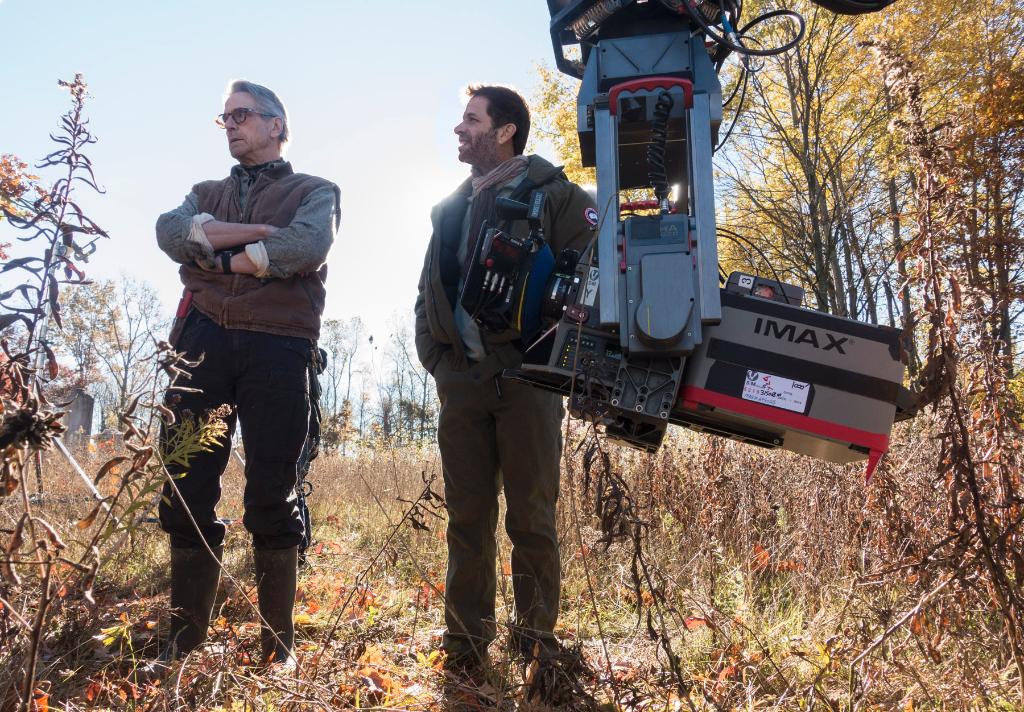
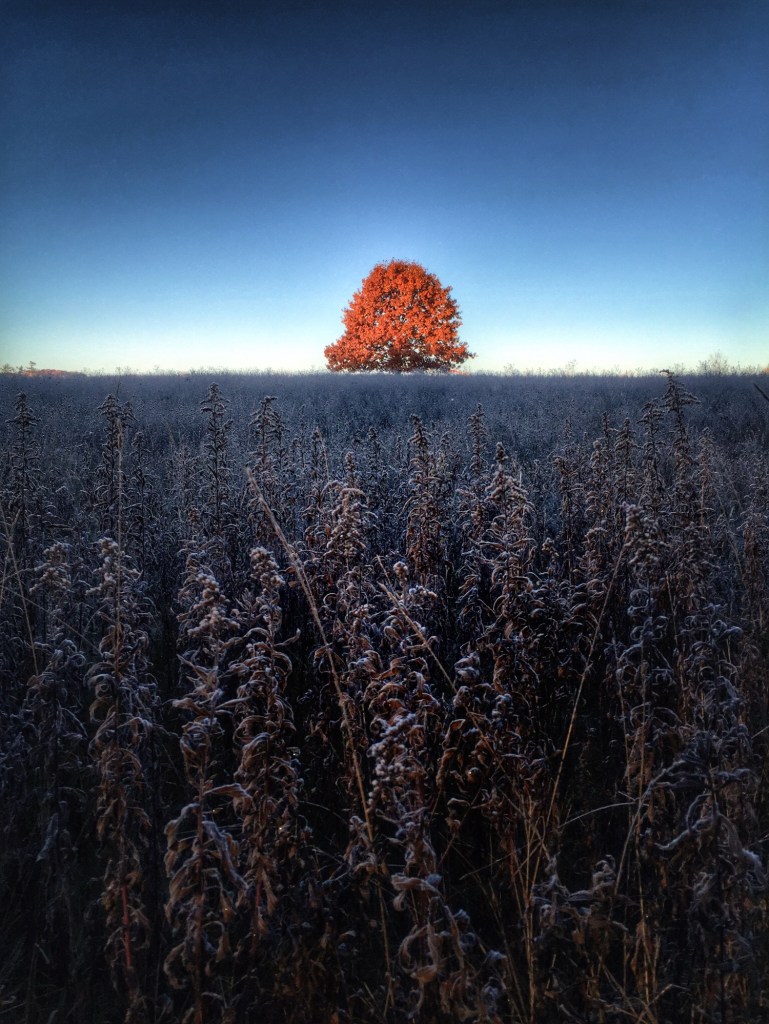
The Wayne funeral sequence was filmed in Orion Oaks County Park, 2301 Clarkston Road, Lake Orion, Michigan. The small cemetery and the mausoleum were constructed for the film. Batman News and OLV provided several detailed photos of the set. A distinctive lone tree on the grounds was photographed by set photographer Clay Enos, production supervisor Matt Hirsch, camera loader Jule Fontana, art department assistant / model maker Liz Ritenour, electrician Erica Kim, additional second assistant director Maggie Callis [1/2/3], and set costumer Kate Abraham. Wayne Manor is fully CGI. The design was based on Sutton Scarsdale Hall, a ruined stately home in Chesterfield, England. The interior set for the ruined version of the building was incorporated into the VFX model.
“The dilapidated Wayne Manor was based on the Sutton Scarsdale Hall which is located just outside of Chesterfield, Derbyshire in the UK. In the film Wayne Manor isn’t quite as damaged as the Sutton Scarsdale Hall and has some minor changes that Zack wanted. A small interior set piece was built in the middle of a large field in Metamora, Michigan, and we integrated that into the interior of our model.”
Bryan Hirota, Art of VFX, 11 April 2016
Michigan film production stalker Bananadoc snapped photos of the shoot here, showing the hearses and extras for the funeral procession. Filming evidently occurred in October 2014 around the 25th and 26th. The IMAX Twitter account has a photo of Zack Snyder and Jeremy Irons on what seems to be the set, although Irons is wearing a different outfit, suggesting a deleted scene.
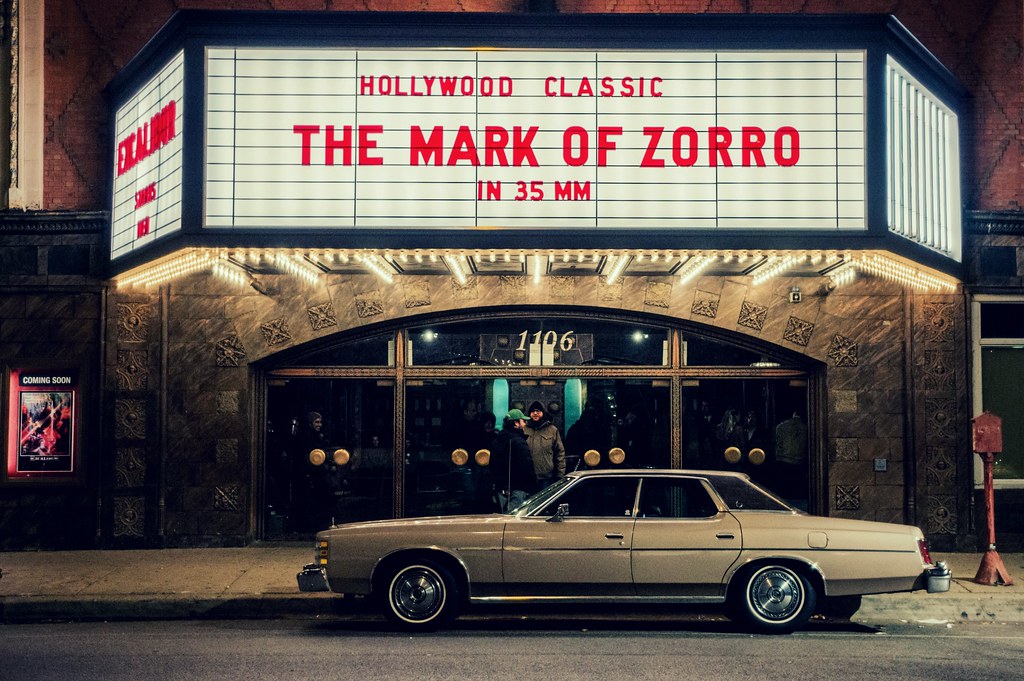
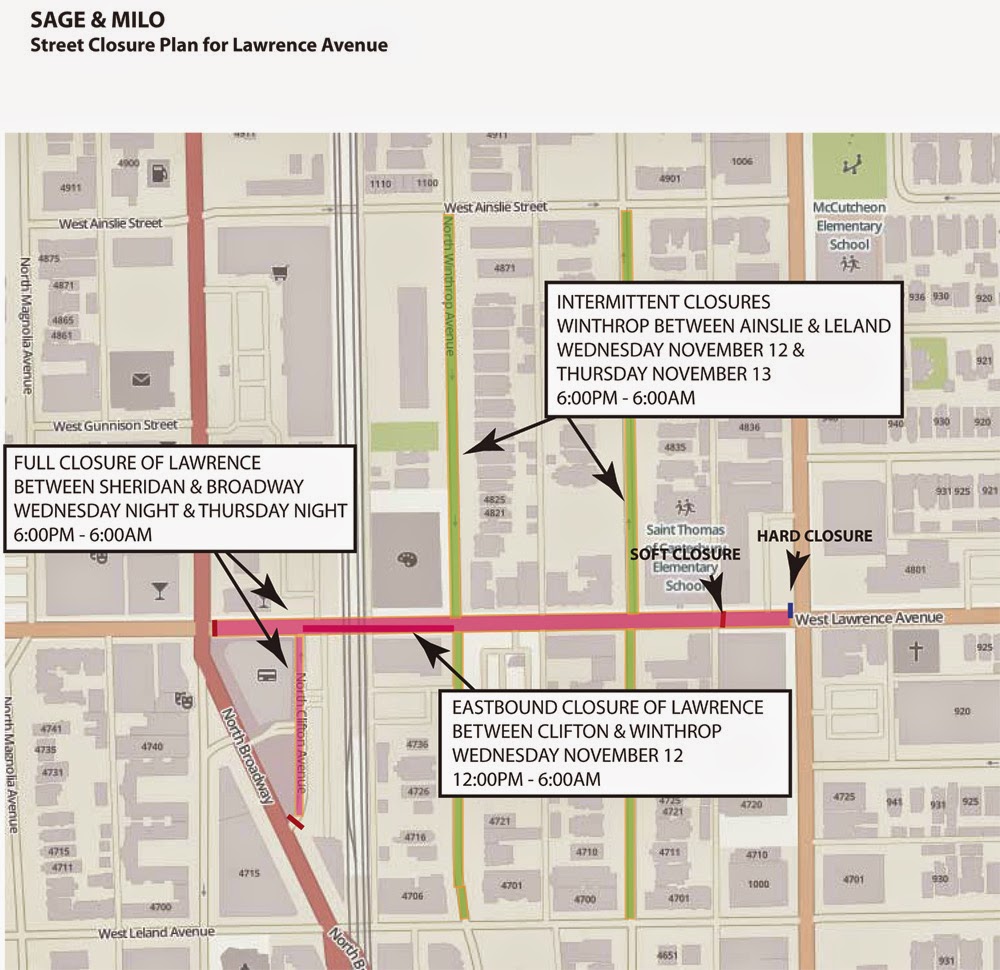
The Wayne murder was filmed outside the Aragon Ballroom, 1106 West Lawrence Avenue, Chicago, Illinois. The entrance was given a makeover for the film, transforming the theatre’s digital marquee into a classic, brighter variant. Gotham taxicabs and other cars with an 80s aesthetic lined the road. The Chicago Transit Authority sign on the elevated train track above became the Gotham Transit Authority, and the Lawrence Red Line station above became the Gotham River Green Line station, complete with station signs for the Bowery and Westword Bridge, a map, station lists, and purchasing options — an excruciating attention to detail. Luis Gomez shot this footage of the set. Many locals and bystanders caught photos of the set which you can see on DNAinfo here. Joshua Mellin has the best photos. The crew set up base camp in the parking lot directly beyond the track, 1128w West Lawrence Avenue.
On 10 November 2014, the City of Chicago announced filming permits and road closures for “Sage and Milo” around Lawrence Avenue for the period of the 5th to the 8th of November. On the 10th, these dates were officially changed to the 11th to the 14th. After two days of construction, the Wayne murder was evidently filmed on the 13th. In this video by Luis Gomez on Instagram, Bruce and Thomas play fight for a moment before continuing their exit down the street (also shot by BlueTrain77), a shot that was evidently cut from the final film. He has a larger video exploring the full set. @danimalish on Instagram caught distant footage of their encounter with Joe Chill here and here. During shooting, @ashleyariane on Twitter snapped this photo of the happy trio, and @danimalish on Instagram got this photo. Production designer John “DJ” DesJardin posted this stunning photo to his Instagram. The set was deconstructed the day after on the 14th.
On 12 December 2020, Snyder used this scene to first reveal that he and digital intermediate producer / senior colourist Stefan Sonnenfeld were working on restoring the full IMAX aspect ratio of Batman v Superman with a digital remaster.
Adam West was briefly rumoured to play Thomas Wayne. West addressed these rumours…
“Can I tell you something? I keep hearing that I’m going to be [in Batman v Superman, but] nobody’s contacted me. They don’t understand that if I play Batman’s father, and one terrible evening, when Batman, Bruce Wayne himself — the young one — is desperate, and the thunder’s crashing, the lightning, I come in through the library window, which kind of springs open in the storm and I say, ‘Bruce, I’m your father. And at one time I was Batman. I want you to look in that volume over there.’ You know what I’m saying?”
Adam West, 13th Dimension, 22 October 2013
Jeffrey Dean Morgan is widely considered ideal casting especially due to his character’s counterpart in Flashpoint (2011), an alternate timeline story in which young Bruce died in that alleyway and Thomas Wayne became Batman — a character Morgan is considered especially qualified to play. Zack Snyder had not considered making a Flashpoint adaptation when he first cast Morgan in the role, but he is aware of the idea and wholeheartedly agrees. Jeffrey Dean Morgan himself is also aware of the concept, and was evidently hopeful after the premise of The Flash (2023) was revealed in 2017, though he fears he will soon be too old to play the role.
“I’ll be honest, I don’t think it was [a thought that Morgan would play a Flashpoint Batman when I cast him], but I will say that I love Jeffrey Dean and I cast him because I liked the idea that Thomas Wayne was a bit of a tough guy, like not a pushover… But when I did hear about that [Flashpoint idea], I was like, ‘Oh, that seems like an easy…’ Clearly he could do the work. That’s no problem.”
Zack Snyder, Film Junkee & Ping Pong Flix Deck the Hall of Justice, 21 December 2020
“Look, the top of my list has always been Batman. That’s always been my favourite superhero and talking about Flashpoint has been very fun. I get asked about it a lot. I love the story of Flashpoint Batman. Who knows? Who knows with DC? Who knows how these franchises work? I mean, I suppose I probably have another two/three-year window and then I’m going to be too old. There’s no way. Look, I’m available. Everybody knows I’m available. I say I’m available, I’ve been saying it for five years. We’ll see what happens.”
Jeffrey Dean Morgan, CinePOP, 6 May 2021
 Snyderverse Analysis